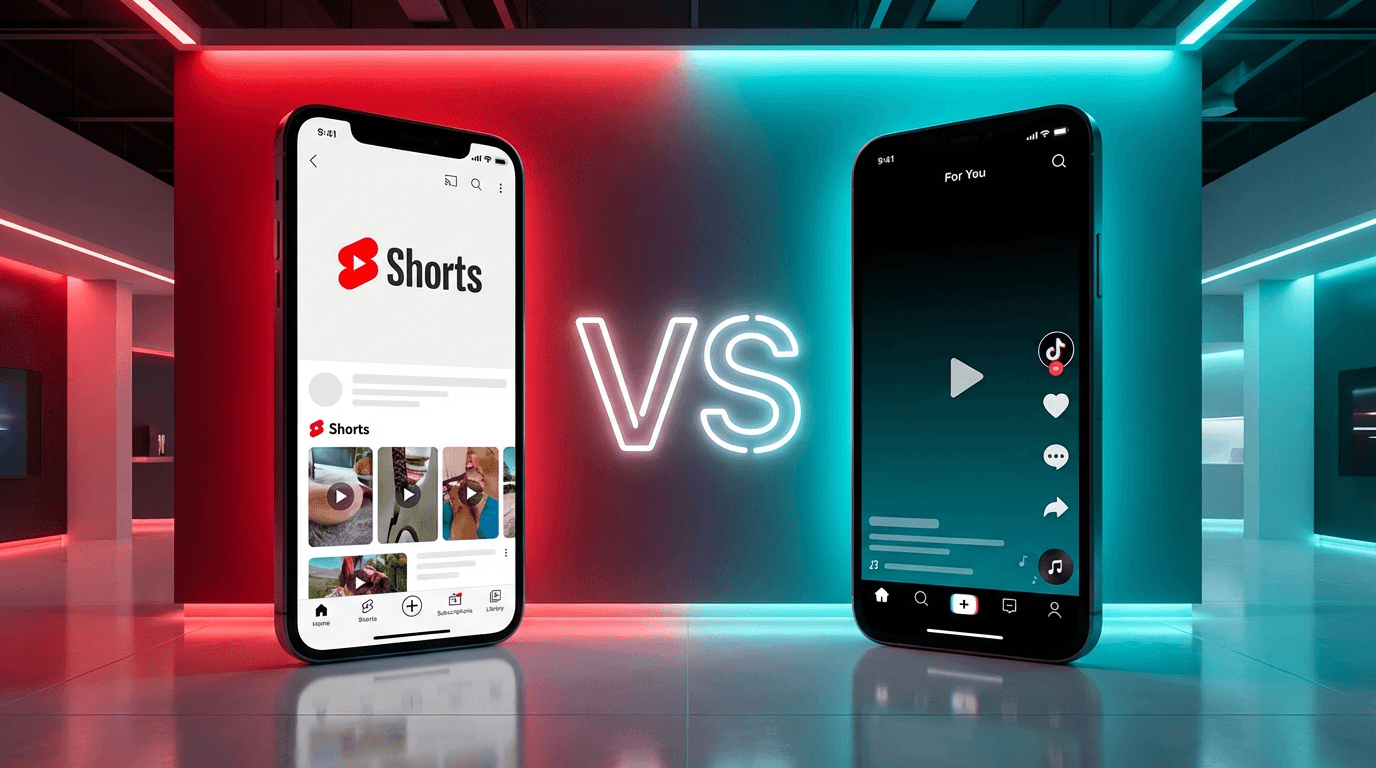
YouTube Shorts vs TikTok vs Reels: Which Platform Pays More

Written by
Jay Kim

A fact-based 2026 comparison of YouTube Shorts, TikTok, and Instagram Reels monetization, including which platform pays more for direct revenue, brand deals, and long-term creator business growth.
If you are posting short-form videos in 2026, this is the question that matters more than most creators admit: which platform actually pays well enough to build a business, not just collect views.
The frustrating part is that creators often compare these platforms as if they all pay the same way. They do not. YouTube Shorts pays through a revenue-sharing system tied to ads shown between Shorts, plus fan funding, Shopping, and a growing brand-deals ecosystem. TikTok pays through a mix of Creator Rewards, LIVE monetization, Series, and brand collaboration tools. Instagram Reels offers ways to earn too, but its direct payouts are less standardized because bonuses are invite-only, while Gifts, Subscriptions, and branded content depend more on audience relationships and eligibility. Based on the official monetization systems available right now, the most defensible answer is that YouTube Shorts usually pays more overall for most creators, TikTok can pay more in certain creator-business models, and Reels is often strongest as an indirect monetization platform rather than a pure direct-payout winner.
That matters because a lot of creators are still making platform decisions based on old Creator Fund-era assumptions, random RPM screenshots, or advice that ignores how monetization actually works now. In 2026, the better question is not just which app pays per view. The better question is which platform gives you the strongest stack of direct payouts, affiliate options, brand-deal infrastructure, audience ownership, and long-term content value.
This guide breaks that down clearly, shows where each platform wins, and explains which one is most likely to pay more for your specific creator model in 2026.
Why this matters more in 2026
Short-form is no longer just a growth channel. For many creators, it is the front door to the whole business.
That changes how you should compare platforms. If one platform gives you better view velocity but worse monetization, and another gives you slightly slower growth but better revenue tools, they are not equal. YouTube has expanded early access to monetization with the expanded YPP, added Shopping features, and keeps building a broader creator-partnerships ecosystem. TikTok continues to push Creator Rewards, longer-form monetization, LIVE earnings, Series, and brand collaboration. Instagram still gives creators ways to earn from Reels, but much of that monetization is either invite-only or built around community support and branded work rather than a broad permanent short-form revenue-share equivalent.
That is why a serious comparison in 2026 needs to look at monetization structure, not just views.
If you want a bigger picture on how short-form platforms fit together, The New Creator Stack: AI Shorts, Reels, TikTok is a useful companion read.
The short answer: which platform pays more?
For most creators, YouTube Shorts is the strongest overall payer in 2026.
That does not mean every single creator will earn more on YouTube than everywhere else. It means YouTube currently has the most complete official monetization stack for short-form creators: ad revenue sharing from the Shorts Feed, earlier YPP access at lower thresholds for fan funding and select Shopping features, full ad-revenue eligibility at the higher tier, Shopping affiliate commissions, and stronger official tools for brand partnerships. TikTok has real earning potential, especially when Creator Rewards, LIVE, Series, and brand collaborations fit your format, but its core direct-rewards program is tied to original videos that are over one minute long and requires higher entry thresholds. Instagram Reels can absolutely generate money, but its direct payout model is less predictable because bonuses are invite-only and other tools like Gifts and Subscriptions depend more heavily on audience support or creator status.
So if the question is “Which platform pays more for the average serious creator business in 2026,” YouTube Shorts is the safest answer.
If the question is “Which platform can pay more for certain niches, especially when longer videos, LIVE, or platform-native monetization behaviors fit the creator,” TikTok can absolutely win in specific cases.
If the question is “Which platform pays more from direct short-form feed views alone,” Instagram Reels is usually the weakest or least predictable answer of the three based on official tools currently emphasized.
How YouTube Shorts pays creators in 2026
YouTube’s official system is the easiest to describe because it is the most structured.
Creators who are monetizing partners and accept the Shorts Monetization Module can earn from ads viewed between videos in the Shorts Feed, along with YouTube Premium revenue tied to eligible Shorts. YouTube also makes clear that only eligible engaged views count, and non-original Shorts or fake views are excluded. That already gives Shorts a stronger foundation than “bonus-only” systems because it is tied to an ongoing platform revenue-share model rather than a temporary invitation or one-off challenge.

YouTube also has a two-layer path into monetization. The expanded YPP lets eligible creators apply earlier at 500 subscribers with either 3,000 watch hours or 3 million Shorts views in 90 days for fan funding and select Shopping features. Full ad-revenue access still requires 1,000 subscribers plus either 4,000 watch hours or 10 million Shorts views in 90 days. That matters because even before full ad sharing, YouTube gives creators earlier business tools that can start compounding.
On top of that, YouTube Shopping affiliate gives eligible creators another way to earn through tagged products and commissions, and YouTube has continued expanding its creator-partnership ecosystem. In 2026, YouTube also highlighted new tools like adding a brand’s site link in Shorts, which makes Shorts more commercially useful than simple impression farming.
That is why YouTube often pays more in practice. It is not only about feed revenue. It is the layering effect:
- Shorts ad revenue
- YouTube Premium share
- fan funding
- Shopping affiliate
- brand deals
- stronger long-term channel infrastructure
If you want a deeper look at Shorts monetization specifically, YouTube Shorts Monetization in 2026: How Much They Pay and YouTube Shorts RPM in 2026: Real Ranges by Niche fit naturally here.
You can also review YouTube’s official Shorts monetization policies directly if you want the current source rules.
How TikTok pays creators in 2026
TikTok’s monetization system is broader than many people realize, but it is also more conditional.
TikTok’s own help center says creators can monetize in many ways depending on location, including TikTok One, the Creator Rewards Program, TikTok LIVE, and more. Its official Creator Rewards materials describe the program as one designed to generate higher revenue potential through high-quality, original content. TikTok’s newsroom also says the optimized rewards formula focuses on originality, play duration, search value, audience engagement, and account ad value.
The most important catch is this: Creator Rewards is built around original videos over one minute long. TikTok also says creators need to be at least 18, have at least 10,000 followers, and have at least 100,000 views in the last 30 days to participate where the program is available. That means TikTok’s best official direct-pay program is not a clean equivalent to a classic under-60-second Shorts strategy. For creators who naturally make longer short-form storytelling, explainers, or search-friendly videos, that can be a good thing. For creators built around ultra-short clips, it changes the payout equation immediately.
TikTok also offers other monetization paths. Its support pages point creators toward TikTok One for brand collaboration, TikTok LIVE for Gifts and subscriptions, and Series for paywalled premium content. So TikTok can pay very well when a creator has the right audience behavior and format fit. It just pays differently than YouTube Shorts.
That is why TikTok is best described this way in 2026: higher upside for certain creator models, but less universally strong than YouTube for the average creator looking for stable, multi-layer short-form revenue.
How Instagram Reels pays creators in 2026
Instagram does pay creators, but the structure is less straightforward.
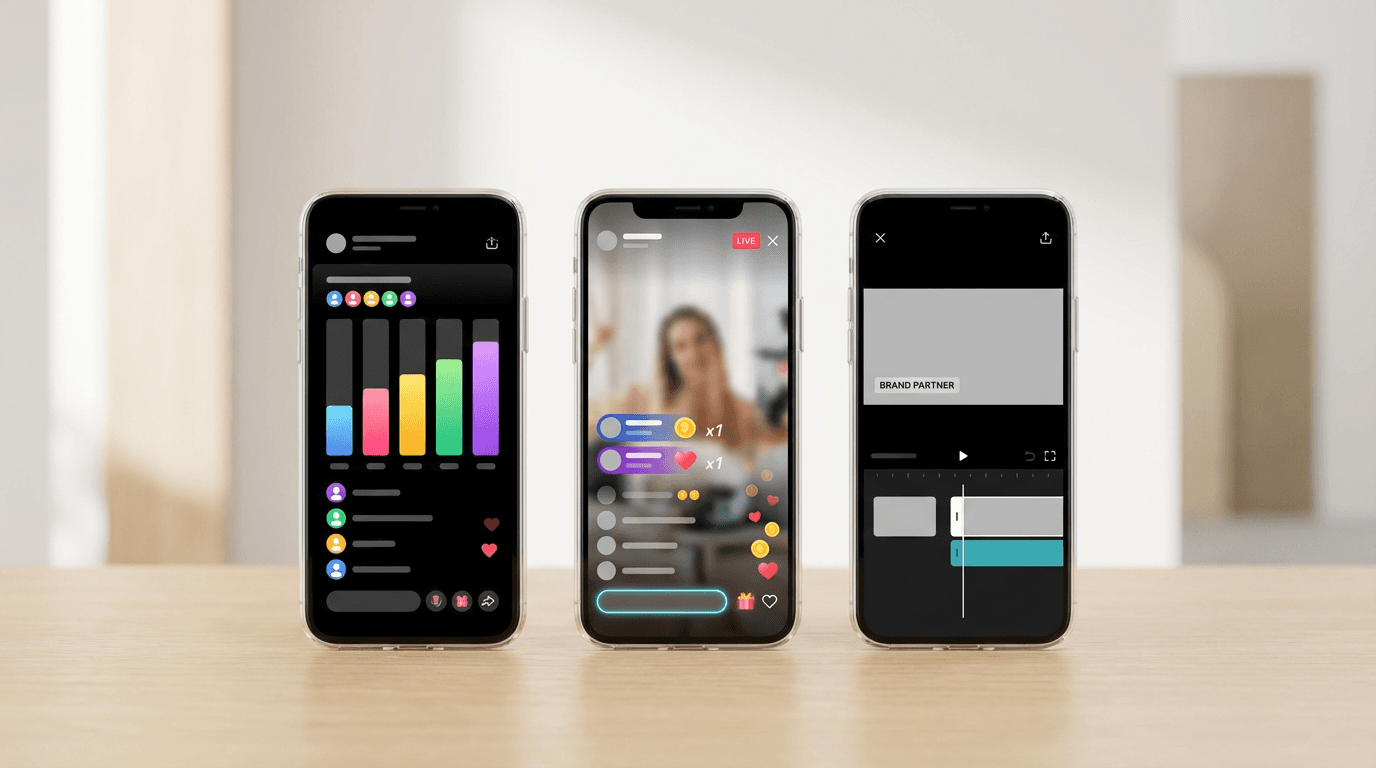
Instagram’s creator and help pages show several monetization routes: Bonuses, Gifts for Reels, Subscriptions, and branded content tools. Bonuses reward performance on Reels and photos, but Instagram also says specific bonus programs may be offered by invitation only and for a limited time. That makes bonuses real, but not the kind of predictable baseline system most creators want to build a business around.
Instagram Gifts lets viewers support creators on Reels. Subscriptions let creators charge recurring monthly fees for exclusive content and benefits, and Instagram’s help pages list eligibility requirements such as having a professional account, being 18+, and having at least 10,000 followers. Instagram also has branded content tools for working with brands. All of those can be valuable, especially for creators with loyal communities, but they are not the same as a broad permanent view-based revenue-share system for all Reels creators.
That is why Reels often feels strong for:
- brand partnerships
- community-led monetization
- subscriptions
- relationship-heavy creators
- visual commerce creators
But if you are asking which platform pays more in a simpler, more scalable direct way for short-form distribution itself, Reels is usually not the strongest answer.
Which platform pays more for different creator types
This is where the comparison gets useful.
If you are a new creator trying to monetize as early as possible
YouTube usually gives the best early route.
That is because expanded YPP opens at 500 subscribers with lower thresholds than TikTok’s Creator Rewards entry rules, while Instagram bonuses are invite-only and Subscriptions usually require 10,000 followers. For most newer creators, YouTube gives the clearest official path from early traction to real monetization.
If your content is mostly under one minute
YouTube Shorts usually makes more sense.
TikTok’s main direct-rewards program is explicitly built around original videos over one minute long. That means many classic short, punchy, fast-cut vertical clips fit YouTube Shorts more naturally from a direct monetization standpoint. Instagram Reels can still help with growth and brand presence, but its direct pay structure is less standardized.
If you are strong at community support and superfans
Instagram and TikTok can get much more interesting.
Instagram’s Gifts and Subscriptions are built around audience support. TikTok LIVE and Series create similar “community pays directly” dynamics. If your audience is highly engaged and you are good at relationship-driven monetization, these platforms can outperform what a pure feed-revenue comparison would suggest.
If you care about long-term creator business stability
YouTube is still the strongest answer.
That is because Shorts does not live alone. It connects to channel pages, long-form video, Search, Shopping, and creator-partnership tools in one ecosystem. That makes YouTube better at turning short-form attention into a broader business.
If you are trying to build that kind of system, YouTube Shorts Best Practices 2026, YouTube Traffic Sources 2026, and YouTube Shorts Titles and Descriptions 2026 Templates are good next reads.
What most creators misunderstand about short-form payouts
The biggest mistake is comparing these platforms with one fake universal RPM mindset.
There is no single official number that tells you YouTube pays X, TikTok pays Y, and Reels pays Z across every creator and niche. That is because each platform uses different monetization logic. YouTube pays through a Shorts Feed revenue-share model plus layered creator-business tools. TikTok ties its flagship rewards system to longer original videos and additional monetization features like LIVE and Series. Instagram spreads monetization across invite-only bonuses, Gifts, Subscriptions, and branded content. Any blanket comparison that ignores those structures is too shallow to be useful. That is an inference from the official program rules themselves, and it is why creators keep talking past each other in payout debates.
The second mistake is chasing the platform that looks most exciting instead of the platform that fits your monetization style.
If your business depends on long-term discoverability and layered revenue, Shorts is hard to beat. If your format thrives in longer mobile storytelling and community-driven in-app monetization, TikTok can be much stronger than outsiders assume. If your advantage is audience trust, DMs, brand appeal, and subscription-style support, Reels can be worth far more than direct view-based earnings alone.
The smartest strategy is usually not choosing one
The most practical answer for creators in 2026 is to stop treating this as a winner-takes-all platform war.

For most creators, the strongest setup is:
- use YouTube Shorts as the core monetization engine
- use TikTok where your format fits Creator Rewards, LIVE, or native discovery
- use Instagram Reels for audience relationship, branded content, and community monetization
- move the best ideas across platforms with platform-specific packaging
That gives you more upside and less dependency risk than betting everything on a single feed.
This is exactly where a system matters more than one viral clip. Creators can use Miraflow AI to build a workflow from idea to script to visual to video, then adapt those assets across platforms. Text2Shorts is especially useful if you want to turn one idea into a repeatable short-form publishing pipeline, while the AI Image Generator, YouTube Thumbnail Maker, and AI Music Generator help with packaging and reuse across channels.
If you want to refine the content side of that system, From Prompt to Reel: Text2Shorts AI Shorts, AI Shorts Formats That Go Viral in 2026, Why Are My Videos Getting 0 Views, and How to Generate YouTube Thumbnails With AI all fit naturally into the same workflow.
Copy-paste prompts for deciding where to post and monetize
Prompt 1: Pick the best platform for a creator niche
Prompt
Compare YouTube Shorts, TikTok, and Instagram Reels for a creator in the niche of [NICHE].
I want the comparison based on:
- direct platform monetization
- affiliate or product-selling potential
- brand-deal potential
- audience loyalty
- scalability in 2026
Then tell me which platform should be my primary platform, secondary platform, and test platform, and explain why.
Prompt 2: Build a short-form monetization stack
Prompt
I create short-form content about [TOPIC].
Design a monetization plan across YouTube Shorts, TikTok, and Instagram Reels.
Include:
- best platform for direct payouts
- best platform for audience growth
- best platform for brand deals
- best platform for fan support
- what content format should go on each platform
- the biggest monetization mistake to avoid
Prompt 3: Repurpose one short-form idea for all three platforms
Prompt
Take this video idea and rewrite it for YouTube Shorts, TikTok, and Instagram Reels.
Idea: [PASTE IDEA]
Audience: [PASTE AUDIENCE]
For each platform, give me:
- best hook
- best length
- monetization angle
- CTA
- what should stay the same
- what should change
Prompt 4: Decide whether YouTube Shorts should be the main platform
Prompt
Analyze whether YouTube Shorts should be my main short-form platform in 2026.
My niche is [NICHE].
My strengths are [STRENGTHS].
My monetization goal is [ADS / AFFILIATE / BRAND DEALS / PRODUCT SALES / COMMUNITY SUPPORT].
Give me:
- 5 reasons YouTube Shorts fits
- 5 reasons it may not fit
- what TikTok would do better
- what Reels would do better
- the final recommendation
Prompt 5: Find the best monetization path by content style
Prompt
I want to know which platform pays more for my content style.
My videos are [FAST CUT / EDUCATIONAL / STORYTELLING / PRODUCT REVIEW / LIFESTYLE / FACELESS / COMMENTARY].
Compare YouTube Shorts, TikTok, and Reels based on:
- monetization eligibility
- direct payout logic
- platform fit
- long-term business potential
Then rank them from strongest to weakest for me and explain the ranking clearly.
FAQ
Which platform pays more in 2026: YouTube Shorts, TikTok, or Reels?
For most creators, YouTube Shorts is the strongest overall answer because it combines Shorts Feed ad revenue sharing with earlier monetization access, Shopping, and stronger official brand-partnership tooling. TikTok can beat it for some creators when longer original videos, LIVE, Series, or other TikTok-native monetization paths fit the content model. Reels can absolutely make money, but its direct short-form payout structure is less predictable because bonuses are invite-only and much of its monetization depends on Gifts, Subscriptions, and branded content.
Does TikTok pay more than YouTube Shorts?
Sometimes, but usually only for specific creator models. TikTok’s official Creator Rewards Program is designed to generate higher revenue potential, but it applies to high-quality original content over one minute long and requires 10,000 followers plus 100,000 views in the last 30 days where available. YouTube Shorts has a broader ongoing revenue-share system for eligible Shorts and more layered monetization tools.
Does Instagram Reels pay creators directly?
Yes, but the structure is less consistent than many creators assume. Instagram offers bonuses, Gifts, Subscriptions, and branded content tools, but bonuses are invite-only, while other tools depend on audience support, account eligibility, or recurring fan relationships.
Is YouTube Shorts the safest platform for long-term monetization?
Yes, for most creators that is the strongest conclusion. YouTube gives creators a clearer ladder from early monetization into full ad revenue sharing, plus Shopping and stronger brand-partnership tools tied to a larger channel ecosystem.
Which platform is best for small creators trying to monetize early?
YouTube is usually the best early path because expanded YPP starts at 500 subscribers and lower thresholds than TikTok Creator Rewards, while Instagram’s bonus system is not a universally available baseline path.
Should creators post on all three?
For many creators, yes. The strongest business model is often to use YouTube Shorts as the main monetization layer, TikTok as a discovery or format-fit layer, and Reels as a relationship and brand layer. That is an inference from how the official monetization systems are structured today.
Conclusion
If you want the cleanest answer to “YouTube Shorts vs TikTok vs Reels: which platform pays more,” the best answer in 2026 is YouTube Shorts for most creators.

That is not because TikTok and Reels cannot make money. They can. TikTok has real upside when longer original content, LIVE, and platform-native monetization features align with your style. Reels can be powerful for creators with strong communities, brand appeal, and support-driven monetization. But YouTube is still the platform with the strongest overall monetization structure for short-form creators who want a stable, layered business instead of a fragile payout stream.
So the smarter play is not just asking which platform pays more in theory.
The smarter play is building a system where YouTube Shorts handles your strongest monetization base, TikTok captures the formats it rewards well, and Reels supports the audience relationships and brand signals that help the rest of the business grow.
That is how creators turn short-form attention into something that actually lasts.