YouTube Shorts Revenue Calculator 2026: From 100K to 10M Views

Written by
Jay Kim

How much do YouTube Shorts actually pay from 100K to 10M views in 2026? Real RPM data, revenue tables by niche, and the stacked income strategies that make Shorts profitable.
You just hit 100,000 views on a YouTube Short and you open your analytics expecting a reward. Then you see the number. Maybe a dollar. Maybe three. Maybe even less than that.
If you have ever felt confused or disappointed by your Shorts revenue, you are not alone. Creators are still stuck on the same distressing question: how much can you really rake in from Shorts? Views are earned fast, and going viral feels within reach, but the actual money you take home rarely lives up to expectations.[10]
This guide breaks down the real ad revenue you can expect at every view milestone from 100K to 10M, the factors that shift your earnings dramatically, how to estimate your own numbers using current RPM data, and how to stack additional revenue layers on top so that your Shorts income actually makes sense in 2026.
No fake earnings screenshots. No inflated numbers. Just the math, backed by the latest creator reports and platform data.
How YouTube Shorts Revenue Actually Works in 2026
Before looking at view-based earnings, you need to understand the system behind the payout.

In 2026, YouTube Shorts monetization still uses the ad sharing pool model. Ad revenue from short videos that appear in the feed fills up a pool. That revenue gets split into a regional ad revenue pool rather than being tied to a specific video. YouTube takes a portion to cover music licensing costs before distributing the rest, and your share of the pool is split out according to how many views your Shorts get from your region.[10]
This is fundamentally different from long-form video monetization, where ads play directly on your specific video and revenue is attributed directly to you.
The 45% share is fixed for creators (unlike long-form where the share is 55%). Revenue is country-based, not global, meaning U.S. views pay more than low-CPM markets. Part of the ad money goes to music rights holders first if licensed music is used.[8]
So you cannot simply multiply views by a fixed rate. Your share of the pool is what matters, and YouTube gives you 45% of your share after everything has been taken out.[10]
This is why two creators with the same view count can earn wildly different amounts. If you want to understand how the algorithm distributes your Shorts to different audiences in the first place, check out how the YouTube Shorts algorithm works in 2026.
The Real RPM Numbers for YouTube Shorts in 2026
RPM stands for Revenue Per Mille, and it represents how much you actually earn per 1,000 views after YouTube takes its cut. For Shorts, these numbers are significantly lower than long-form video.

Shorts RPM ranges from $0.01 to $0.07 per 1,000 views.[3] Most creators earn between $0.03 and $0.10 per 1,000 Shorts views, though rates have been climbing as more advertisers invest in the Shorts feed.[2]
Tier 1 countries (USA, UK, Canada) see higher RPM, occasionally reaching $0.15 for high-value niches like finance or tech.[10]
To put this in perspective: Shorts earn approximately 95 to 99% less per view than long-form videos. Not 50% less. Not 70% less. Ninety-five percent less.[4]
That sounds brutal, and it is, when you look at ad revenue alone. But keep reading, because ad revenue is only one layer of the Shorts income story.
YouTube Shorts Revenue Calculator: From 100K to 10M Views
Here is the revenue breakdown at each major view milestone, using the confirmed RPM range of $0.01 to $0.10 per 1,000 views. The "typical" column uses $0.03 to $0.05 RPM, which is where most creators land based on current reports.

100,000 Views
At the lowest RPM ($0.01), 100K views generates approximately $1. At a typical RPM of $0.03 to $0.05, you are looking at $3 to $5. In the best case scenario with high-value niche content and Tier 1 audience ($0.10 RPM), that rises to about $10.
Most people see around $0.01 to $0.05 per 1,000 views from Shorts ad revenue alone, translating to roughly $1 to $30 for 100,000 views.[10]
For most creators, 100K views on a Short generates enough for a coffee, not a car payment. If your Shorts are consistently hitting this range but not growing beyond it, the first place to look is your first 3 seconds, which is where most viewers decide to stay or swipe.
250,000 Views
At $0.03 RPM, 250K views earns roughly $7.50. At $0.05 RPM, that climbs to $12.50. With a strong niche and Tier 1 audience at $0.10 RPM, you are looking at about $25.
This is the range where many Shorts start gaining traction in the algorithm but before ad revenue becomes meaningful. The real value at this stage is subscriber growth and channel visibility, not the direct payout.
500,000 Views
At $0.03 RPM, 500K views produces about $15. At $0.05 RPM, you get $25. In the upper range at $0.10, that becomes $50.
A Short that hits 500K views is performing well enough to signal to the algorithm that your content works. This is where consistent posting strategies start compounding, because a few Shorts at this level each week can add up fast across a month.
1,000,000 Views (1M)
A Short with 1 million views might earn between $30 and $100.[2]
TubeBuddy published a case study in January 2026 showing one of their channels earned $32 from exactly 1 million YouTube Shorts views. That is $0.032 per 1,000 views, consistent with the $0.03 to $0.08 range creators report across the platform.[4]
At 1 million views, the math becomes clear: pure ad revenue from a single viral Short does not pay the bills. A Shorts video reaching 1 million views might generate only $10 to $60 in ad revenue.[5]
But 1M views does something more important than generating ad dollars. It can drive thousands of new subscribers, trigger the algorithm to push your future content harder, and put you on the radar for brand deals. If you are wondering why high view counts sometimes do not translate to subscriber growth, this guide explains the disconnect.
3,000,000 Views (3M)
At $0.03 RPM, 3M views generates about $90. At $0.05, you are looking at $150. In the high range at $0.10, that becomes $300.
At $0.03 RPM, you need 3.3 million views to earn $100.[3]
Three million views is significant for channel growth and starts making you attractive for Shorts brand deals, which typically pay far more than ad revenue alone.
5,000,000 Views (5M)
At $0.03 RPM, 5M views produces $150. At $0.05 RPM, the payout is $250. And at $0.10, you reach $500.
At this level, if these views are spread across multiple Shorts rather than a single viral hit, you are building a distribution engine. The algorithm treats consistent multi-million-view channels differently, giving future uploads a larger initial push.
10,000,000 Views (10M)
10 million views translates to about $300 to $2,000, though your actual number can be outside these ranges depending on audience country mix.[7]
Many creators are shocked to learn that generating 10 million views on a YouTube Short might only yield a few hundred dollars.[9]
Ten million Shorts views is also the threshold for joining the YouTube Partner Program through the Shorts-specific path. To officially join the YouTube Partner Program with full ad revenue access, you need 1,000 subscribers AND either 4,000 valid public watch hours in the last 12 months OR 10 million valid Shorts views in the last 90 days.[9]
So if you are a new creator focused exclusively on Shorts, 10M views in 90 days is your gateway to monetization. That makes it worth understanding exactly how many views it takes to go viral and what formats perform best.
Quick Reference: Shorts Revenue by View Count
Here is the full table for quick scanning. These numbers assume the creator is in the YouTube Partner Program and earning purely from ad revenue sharing.
100K views: $1 to $10 (typical: $3 to $5)
250K views: $2.50 to $25 (typical: $7.50 to $12.50)
500K views: $5 to $50 (typical: $15 to $25)
1M views: $10 to $100 (typical: $30 to $50)
3M views: $30 to $300 (typical: $90 to $150)
5M views: $50 to $500 (typical: $150 to $250)
10M views: $100 to $1,000+ (typical: $300 to $500)
These ranges reflect the reality that most creators in 2026 see YouTube Shorts RPM around $0.01 to $0.07 per 1,000 views, but the actual number depends far more on viewer country mix, music licensing deductions, and ad demand than niche alone.[7]
Why Your Shorts RPM Might Be Higher or Lower Than Average
Two creators posting the same type of content can see completely different RPMs. Here is what moves the needle.
Audience Geography
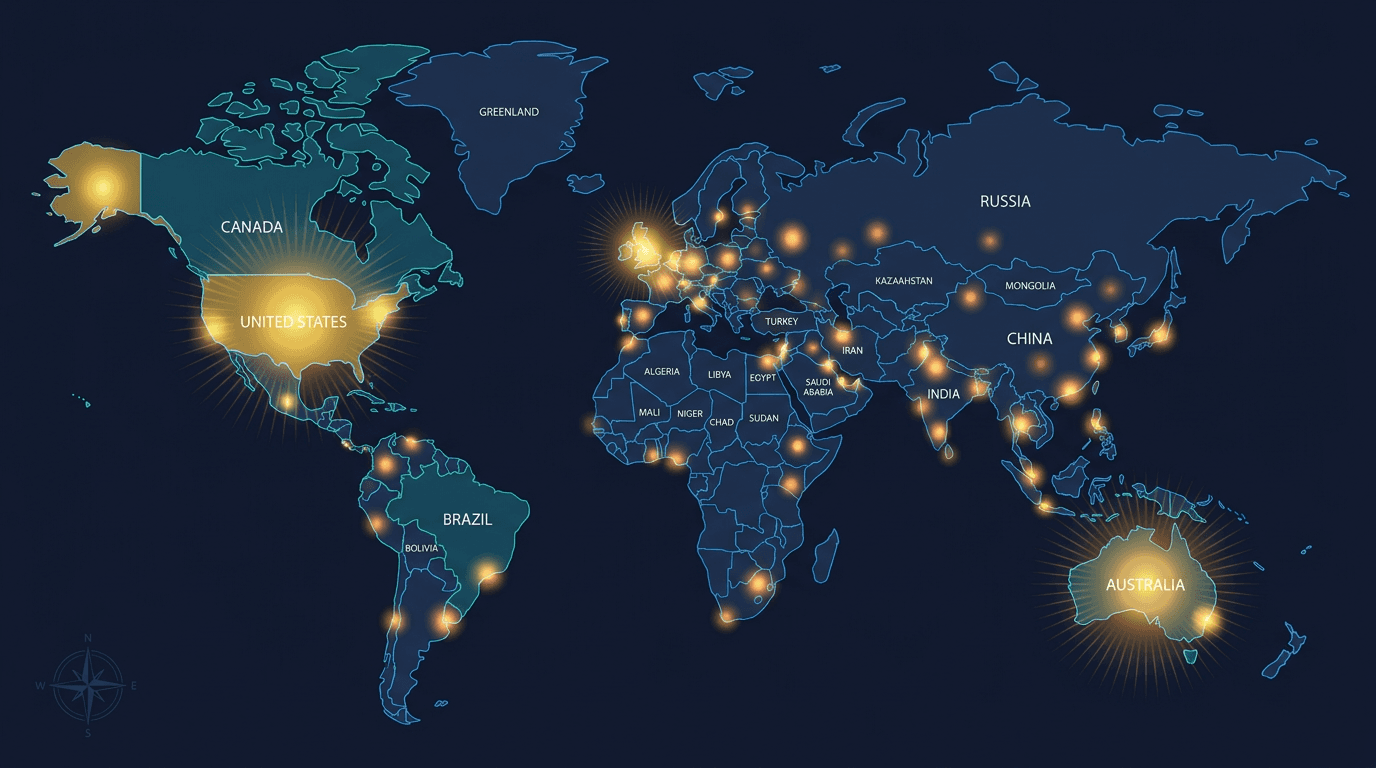
This is the single biggest factor. Even partial US traffic significantly lifts overall channel RPM. A channel with 50% US traffic and 50% tier 3 traffic earns approximately 3 to 4x more than the same channel with 10% US traffic and 90% tier 3 traffic. Every percentage point of US audience share matters.[4]
75% of all YouTube Shorts views come from outside the creator's country.[3] That means your Shorts may go viral in regions where ad rates are low, dragging your RPM down even if your content targets a high-value niche.
If you are creating content in English targeting US, UK, Canadian, and Australian audiences, your RPM will naturally be higher. For creators looking to build content strategies around geographic targeting, understanding YouTube traffic sources becomes critical.
Niche and Advertiser Demand
Topic affects revenue, with finance Shorts earning 10x more RPM than comedy or lifestyle.[3]
YouTube Shorts RPM for the finance niche averages $0.05 to $0.30 per thousand views, compared to $10 to $25 for long-form content.[1]
Here is a general tier structure for Shorts RPM by niche:
Higher RPM niches ($0.05 to $0.30): Finance, investing, business education, B2B software, real estate
Mid-range RPM niches ($0.03 to $0.08): Tech, education, health, self-improvement
Lower RPM niches ($0.01 to $0.04): Gaming, entertainment, comedy, music, lifestyle, vlogs
If you are picking a niche for a new Shorts channel, the best niches for YouTube Shorts in 2026 breaks this down with more granular data.
Music Licensing
A Short with a trending copyrighted song might rake in more views, but it will also make less revenue per view. Shorts using original audio or voiceover will often keep more of their monetizable revenue because there is no external licensing fee to pay. Creators often notice that they earn a higher RPM on Shorts that use original or non-copyrighted sounds compared to those full of music, even if the latter get more views.[10]
This creates a real tradeoff: trending sounds can boost reach but reduce per-view earnings. If you want the reach benefits of music without the revenue hit, generating no-copyright music with AI is one way to keep your full creator share.
You can also use Miraflow AI's music generator to create original background tracks for your Shorts. The tool lets you describe the mood, genre, and instrumentation you want, and generates royalty-free music in under a minute.
Seasonality
Ad budgets spike in Q4, especially in November and December, when brands push holiday campaigns and spend big. In January, those budgets reset. Expect a 30 to 50% dip in RPM across almost all niches.[6]
A Short that earns $0.05 RPM in December might only earn $0.02 RPM in January with the exact same audience. Timing your content pushes around seasonal ad spending can meaningfully affect your annual revenue.
The Revenue Layers That Actually Make Shorts Profitable
If you have read this far, you understand that Shorts ad revenue alone is thin. So why do millions of creators post Shorts every day?
Because the smart ones are not relying on ad revenue. Only 8% of Shorts creators rely on ads as their primary source of income.[3]
Here is how the revenue actually stacks in 2026.

Layer 1: Ad Revenue (The Base)
This is what we have been calculating above. For most creators, ad revenue from Shorts represents the smallest income layer. It exists, it compounds with volume, but it will not pay rent on its own unless you are generating tens of millions of views monthly.
Layer 2: Brand Deals and Sponsorships
YouTube Shorts sponsorships typically pay $200 to $2,000, depending on views and niche.[6]
Most deals currently fall in the $100 to $500 range for most creators, up to $5,000 for large channels with significant Shorts followings.[1]
A single Shorts brand deal can pay more than months of ad revenue. According to industry analysis, 76% of top-earning Shorts creators make more from brand deals than ad revenue.[4]
A 2025 survey by Aspire found that 62% of brands planned to increase their Shorts sponsorship budgets in 2026.[5] The market for Shorts sponsorships is growing, not shrinking.
For a deeper look at how brand partnerships work on Shorts in 2026, including the new Creator Partnerships tools YouTube rolled out, check this brand deals guide.
Layer 3: Affiliate Marketing
Placing tracking links in your Shorts description generates passive revenue every time someone clicks and purchases. This works especially well in tech, finance, and product review niches.
A Short with 500K views and a well-placed affiliate link can generate meaningful clicks, especially in niches like tech, software, and gear.[4]
Layer 4: Subscriber Growth Into Long-Form
This is where the compounding happens. Channels using Shorts plus long-form in tandem grow 41% faster than long-form-only channels.[4]
Most creators use Shorts to grow subscribers and funnel viewers toward long-form content where RPM is higher.[6]
Think of Shorts as the top of a funnel. The Shorts bring the audience. Long-form videos, memberships, courses, and products convert that audience into real income. For strategies on bridging Shorts viewers into long-form subscribers, see how to get your first 1,000 YouTube subscribers.
Layer 5: Digital Products and Courses
Shorts function as free samples of your expertise. A creator who teaches photography can post 30-second tips as Shorts, build trust with viewers, and convert a percentage to a $200 photography course. The Shorts RPM is irrelevant when the real monetization is a digital product with 90%+ margins.[4]
Layer 6: Super Thanks and Memberships
With the Early Access tier at just 500 subscribers, 3 public uploads in the last 90 days, and either 3,000 watch hours or 3 million Shorts views, you can unlock Super Chats, Channel Memberships, and YouTube Shopping.[9]
These fan-funding features give creators a way to monetize before even hitting the full YPP threshold.
What the Combined Revenue Actually Looks Like
To show how revenue stacking changes the picture, here is a realistic scenario for a mid-tier Shorts creator in a tech niche, posting 3 to 5 Shorts per week and averaging 2 million total Shorts views per month.

Ad Revenue: 2M views at $0.05 RPM = $100/month
Brand Deals: One Shorts sponsorship per month at $500 = $500/month
Affiliate Revenue: Estimated $150 to $300/month from description links
Long-Form Funnel: Shorts drive traffic to 2 long-form videos earning $4 RPM with 50K views each = $400/month
Total estimated monthly income: $1,150 to $1,300
Compare that to the $100/month from ad revenue alone. The difference is 10x or more when you layer revenue streams. Creators who combine three income streams earn 3x more than those using ads alone.[6]
If you are looking for more ideas on building revenue beyond ad payouts, this guide on making money with YouTube Shorts beyond ad revenue covers additional strategies.
How to Create More Shorts Without Burning Out
The math is clear: volume matters for Shorts revenue. More Shorts means more total views, more chances to go viral, more brand deal opportunities, and more subscribers flowing into your funnel.
But creating multiple Shorts per week is time-consuming, especially if you script, shoot, edit, and publish everything manually.
This is where AI workflows make a real difference. Miraflow AI's Text2Shorts tool lets you enter a topic, choose between animation or realistic video styles, and the platform generates a script, creates scene visuals, lets you pick a voice, and stitches the final Short together. Instead of spending hours per Short, you can produce multiple pieces of content in the time it takes to film one.
Creators who pair this with AI-generated thumbnails for their Shorts channel page and profile grid create a more professional-looking channel that attracts both viewers and brand partners. For the best practices on Shorts thumbnails specifically, this thumbnail strategy guide covers where thumbnails show up and how to optimize them.
For background music that does not eat into your revenue through licensing deductions, Miraflow's AI music generator can create original tracks in Simple or Custom mode with controls for duration, BPM, and instrumentation.
Niche-Specific Revenue Estimates: 1M Views Comparison
To make this more concrete, here is what 1 million Shorts views looks like across different niches, factoring in the typical RPM range for each.

Finance and Investing: $50 to $300 (RPM $0.05 to $0.30)
Tech and Software: $30 to $100 (RPM $0.03 to $0.10)
Education and Tutorials: $30 to $80 (RPM $0.03 to $0.08)
Health and Fitness: $20 to $70 (RPM $0.02 to $0.07)
Gaming: $10 to $40 (RPM $0.01 to $0.04)
Entertainment and Comedy: $10 to $30 (RPM $0.01 to $0.03)
Music and Lifestyle: $10 to $25 (RPM $0.01 to $0.025)
A finance video can earn 30x more per view than a music video. Same platform. Same watch time. Thirty times the revenue.[5]
If you are choosing between niches and revenue matters, the data points clearly toward finance, tech, and education as the strongest Shorts categories. For a complete niche comparison with RPM data, best niches for YouTube Shorts in 2026 has the full breakdown.
5 Ways to Increase Your Shorts RPM
While you cannot control YouTube's pooled revenue model, there are practical levers that influence how much you earn per 1,000 views.
Use original audio instead of copyrighted music.

Shorts with no music keep the full creator share, so original audio tends to earn more per view.[2] Use voiceovers, original narration, or AI-generated music to avoid the licensing revenue split.
Target Tier 1 audience geographies.
Create content in English for US, UK, and Canada viewers.[10] English-language content with clear value propositions naturally attracts higher-RPM audiences.
Choose a high-advertiser-demand niche.
Finance, tech, B2B education, and real estate content commands higher RPMs because the advertisers in those spaces have larger budgets and higher customer lifetime values.
Optimize for retention and completion rate.
Improving "people who chose to watch" signals like strong hooks, retention, and rewatches can change how your Shorts get distributed, which changes your country mix and pool share.[7] For hook techniques, check why the first 3 seconds of YouTube Shorts matter.
Publish during Q4 for peak RPM.
Ad budgets are highest in October through December. Plan your best content releases for this period if maximizing ad revenue is a priority. For content timing guidance, best times to post YouTube Shorts covers optimal scheduling.
Common Mistakes That Kill Shorts Revenue
Understanding what reduces your earnings is just as important as knowing what increases them. Here are the patterns that consistently lead to disappointing Shorts payouts.
Chasing views in low-RPM regions.
A Short can hit millions of views in markets where ad rates are extremely low. If most of your audience is in tier 3 countries, even massive view counts produce tiny payouts. Track your audience geography in YouTube Studio and focus on content that attracts higher-value viewers.
Using trending copyrighted songs on every Short.
Trending audio boosts discoverability, but the music licensing deductions reduce your revenue share before you ever see a penny. Balance trending audio with original sound to protect your earnings on the Shorts that matter.
Publishing inconsistently.
Post consistently, two to three Shorts per week, signaling to YouTube's algorithm that you are serious. Channels that post once weekly take 2x longer to monetize.[6] For posting frequency data, should you post daily Shorts in 2026 breaks down the tradeoffs.
Relying on Shorts ad revenue as your only income.
Treat Shorts as marketing, not monetization. Invest in consistent Shorts posting as a growth strategy, and build your real revenue on the long-form content and business opportunities that Shorts-driven growth enables.[4]
Ignoring your Shorts analytics.
If you are not reading your analytics regularly, you are guessing about what works and what does not. For a guide on interpreting the data, YouTube Shorts analytics in 2026 explains each metric and what to do about it.
How to Calculate Your Own Shorts Revenue
The formula is straightforward once you know your RPM.

Monthly Shorts Revenue = (Total Monthly Shorts Views / 1,000) × Your RPM
If you do not know your RPM yet, use $0.03 to $0.05 as a conservative starting estimate for a general-topic English-language channel. For finance and tech channels, use $0.05 to $0.15 as your estimate.
You can find your actual RPM in YouTube Studio under Analytics, then Revenue. The number there already accounts for YouTube's 45% cut, music licensing deductions, and the pool-based distribution.
For creators who are not yet monetized, the view milestones are what to focus on. To earn money from Shorts using ads, you need 1,000 subscribers and either 10 million Shorts views in 90 days or 4,000 watch hours from long videos.[2] If you are working toward that goal, YouTube Shorts monetization requirements has the full pathway.
Creating Revenue-Optimized Shorts with AI
If the revenue data above has you thinking about producing more Shorts at higher quality and faster speed, that is exactly where AI tools close the gap.

With Miraflow AI, you can build an entire Shorts production pipeline in the browser without any video editing software. Start with Text2Shorts by entering your topic, and the platform generates the script, creates visual prompts for each scene, lets you select from AI voices at adjustable speeds, and assembles the final 9:16 video. You can choose between animation style for illustrated motion graphics or realistic style for cinematic visuals.
For Shorts that need custom visuals, the AI image generator creates scene images from text prompts, and the cinematic video generator produces hyper-realistic 8-second clips that can serve as individual scenes within your Shorts.
Creators who batch-produce Shorts this way can maintain a consistent posting schedule without spending hours per video, which directly supports the volume strategy that makes Shorts revenue add up over time.
For AI prompts specifically designed for YouTube Shorts scripts, including copy-paste templates for different formats and niches, that resource covers multiple script structures you can use immediately.
Shorts Revenue Compared to Other Platforms
Creators often ask how YouTube Shorts revenue compares to TikTok and Instagram Reels. Here is where things stand in 2026.
TikTok's Creator Rewards Program pays finance creators $0.40 to $3.00 RPM, with some outliers reaching $11.72 for high-retention AI and finance content. Finance content earns 4.2x more than comedy on TikTok due to advertiser demand. However, YouTube's 55% revenue share model combined with higher advertiser bids makes it the superior platform for monetizing finance content overall.[1]
For Shorts specifically, TikTok currently pays more per 1,000 views than YouTube Shorts for most niches. But YouTube has a major structural advantage: Shorts funnel viewers to long-form content where RPMs are 20x to 50x higher.
The winning strategy for most creators in 2026 is cross-platform distribution. Create a Short once, then publish it on YouTube, TikTok, and Reels. For a full platform comparison, YouTube Shorts vs TikTok vs Reels: which platform pays more covers the revenue differences in detail.
The Long-Term Play: Why 10M Views on Shorts Matters More Than the Payout
If 10 million Shorts views only generates $300 to $2,000 in direct ad revenue, why would anyone pursue that?

Because the indirect value is where the real return lives.
Ten million views builds a subscriber base that you can monetize through long-form content, products, and services for years. It qualifies you for the YouTube Partner Program. It makes you discoverable to brands who pay significantly more than ad revenue for a single partnership. And it compounds: every successful Short increases the algorithm's confidence in your future content.
Shorts speed up channel growth, increase your visibility, and drive traffic to videos that earn high CPMs. Brand-new channels have gotten monetized in a few weeks thanks to viral Shorts. And long-form videos have blown up after a Short started funneling traffic directly to them.[9]
The creators who treat Shorts as a growth investment rather than a direct income stream are the ones building sustainable channels in 2026. For a complete guide on growing a channel from scratch using Shorts, YouTube Shorts beginner's guide starting from zero walks through the entire process.
Conclusion
YouTube Shorts ad revenue in 2026 ranges from about $1 per 100K views on the low end to roughly $1,000 or more per 10M views on the high end. The exact number depends on your audience geography, niche, music usage, and the seasonal ad cycle.
For most creators, ad revenue alone does not make Shorts a viable standalone income source. But that is not how the most successful Shorts creators operate. They stack brand deals, affiliate revenue, subscriber growth into long-form, and digital products on top of the ad base. With those layers in place, a channel generating 2 to 5 million Shorts views per month can realistically earn over $1,000 monthly, with the ceiling rising as your audience and partnerships grow.
The formula is straightforward: pick a niche with reasonable RPM, create consistently, target Tier 1 audiences, use original audio where possible, and build revenue layers beyond ads.
Tools like Miraflow AI make the production side faster by letting you generate scripts, visuals, music, and thumbnails in one browser-based platform. More Shorts at higher quality, produced in less time, means more total views, more subscriber growth, and more revenue across every layer.
The Shorts game in 2026 is a volume and strategy game. The creators who win understand the math, produce consistently, and build systems around the content, not just the content itself.
Frequently Asked Questions
How much does YouTube pay for 1 million Shorts views in 2026?
Most creators report earning between $30 and $100 from ad revenue for 1 million YouTube Shorts views. The exact amount depends on your audience's geographic location, your content niche, and whether licensed music is used. Finance and tech niches tend to earn at the higher end, while gaming and entertainment earn at the lower end.
What is the average YouTube Shorts RPM in 2026?
The average YouTube Shorts RPM in 2026 falls between $0.01 and $0.07 per 1,000 views for most creators, with some high-value niches reaching $0.10 to $0.15. RPM varies primarily by viewer country, niche advertiser demand, and whether copyrighted music reduces your share of the revenue pool.
Can you make $1,000 per month from YouTube Shorts?
Earning $1,000 per month from Shorts ad revenue alone requires approximately 20 to 33 million monthly views at typical RPM rates. However, most creators who earn $1,000 or more monthly from Shorts do so by combining ad revenue with brand deals, affiliate marketing, and long-form video funnels.
How many YouTube Shorts views do I need to get monetized?
To join the YouTube Partner Program through the Shorts path, you need 1,000 subscribers and 10 million valid Shorts views in the last 90 days. For the early access tier that unlocks fan funding features like Super Thanks and memberships, you need 500 subscribers and 3 million Shorts views.
Do YouTube Shorts with music earn less money?
Yes. When a Short uses licensed or copyrighted music, a portion of the revenue pool allocation goes to music rights holders before you receive your share. Shorts using original audio, voiceover, or non-copyrighted music keep the full creator allocation and typically earn a higher RPM.
Is YouTube Shorts RPM higher in the US?
Yes. Ad rates in the US, UK, Canada, and Australia are significantly higher than in most other countries. A channel with majority Tier 1 (US, UK, Canada, Australia) traffic can earn 3 to 10x more per 1,000 views than a channel with the same view count from tier 3 countries.
How does YouTube Shorts revenue compare to TikTok?
TikTok's Creator Rewards Program generally pays higher per 1,000 views than YouTube Shorts, particularly for long-form TikTok content. However, YouTube Shorts feeds viewers into a long-form ecosystem where RPMs are 20x to 80x higher, making YouTube the stronger overall monetization platform for creators who produce both formats.
What niches pay the most for YouTube Shorts?
Finance, investing, and business education consistently report the highest Shorts RPMs, ranging from $0.05 to $0.30 per 1,000 views. Tech, software tutorials, and real estate follow, with general education and health content in the mid-range. Gaming, entertainment, and comedy earn the lowest Shorts RPMs.
References
- YouTube RPM Finance Niche 2026: Complete Earnings Guide with Real Data
- YouTube Shorts Monetization 2026: How Much Shorts Pay + How to Earn More | Ssemble
- How Much Do Sponsors Pay Youtubers in 2026?
- YouTube Shorts Monetization in 2026: Requirements, RPM, and How Much You Get Paid
- 19 Most Profitable YouTube Niches 2026 (Real RPM Data) | OutlierKit
- YouTube brand sponsorships in 2026 - NEED to know guide
- YouTube Shorts Statistics 2026: Usage, Growth, And Monetization Data
- YouTube CPM Rates by Niche — Complete Breakdown (2026)
- YouTube Sponsorship: Rates & What to Charge in 2026
- YouTube Income Per 1,000 Views 2026: Every Niche, Every Country, Shorts vs Long-Form
- YouTube Shorts Monetization in 2026: The Complete Revenue Guide
- Most Profitable AI YouTube Shorts Niches in 2026 (RPM Data Included)
- How Much to Charge for YouTube Sponsorships: 2026 Rates for Micro-Influencers | SEOWebster
- YouTube Monetization Statistics 2026: Ad Revenue, CPM Rates & Creator Earnings - AutoFaceless Blog
- Which YouTube Niches Pay the Most? CPM Rates in 2026
- YouTube Sponsorship Trends 2026 | What's Changed for Creators
- YouTube Earnings Calculator (2026): Check Your Channel Income (Updated RPM)
- YouTube Shorts Monetization Requirements 2026 |...
- YouTube CPM & RPM Rates in 2026: Averages by Niche and Country – MilX
- YouTube Sponsorship Rates: What Sponsors Really Pay and How to Price Deals – MilX
- YouTube Shorts RPM Benchmarks
- YouTube Monetization 2026: Complete Guide to Every Revenue Stream
- YouTube Shorts RPM in 2026: Typical Ranges by Niche + What Actually Changes Your Pay
- YouTube Sponsorship Rates 2026: What to Charge by Niche, Subs, and CPM | OutlierKit Resources
- YouTube CPM & RPM Rates 2026: Average, Niches, Countries & More – Lenos
- YouTube Shorts Monetization in 2026: How Much Do Shorts Really Pay?
- How Much Do Sponsors Pay YouTubers? Complete Rate Guide 2026 - Bluehost Blog
- YouTube Earnings Calculator | Views, RPM, Shorts & Income 2026 - UltimateInfoGuide
- YouTube Shorts RPM: what to expect in 2026 – AIR Media-Tech
- YouTube Shorts Monetization: Requirements & Pay (2026) - Shopify
- YouTube CPM Rates by Niche 2026Data2026 Data2026Data - What Creators Actually Earn
- YouTube Shorts RPM in 2026: How Much Creators Really Earn - Mediacube
- YouTube Shorts Earnings Calculator 2026 (Real Shorts RPM Data)
- 25 Highest RPM YouTube Niches in 2026 ($30-$50+ CPM) - Virlo
- YouTube Shorts Brand Deals in 2026: How Creator Partnerships Actually Work