Claude Opus 4.7 vs Opus 4.6: Every Difference That Actually Matters

Written by
Jay Kim
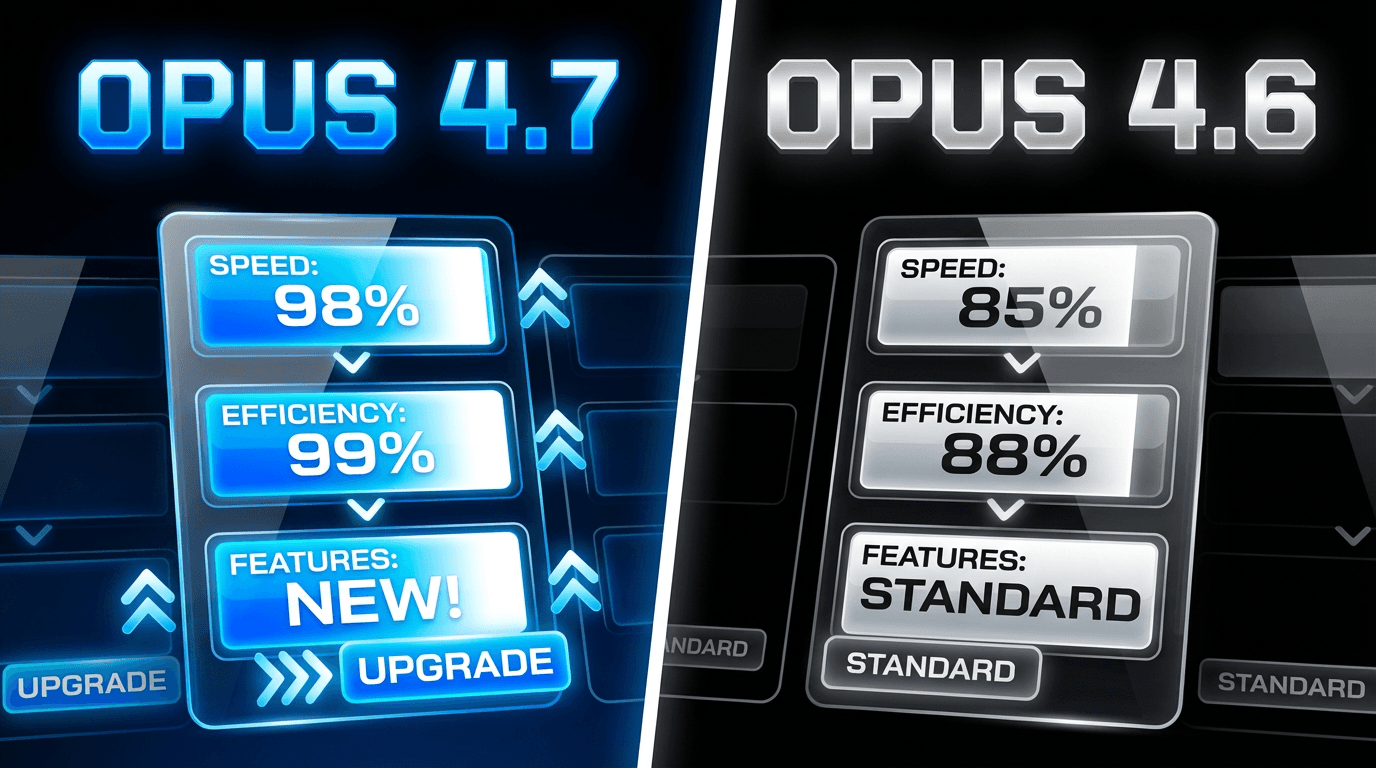
A complete technical comparison of Claude Opus 4.7 vs Opus 4.6 covering benchmarks, breaking API changes, the new tokenizer, vision upgrades, task budgets, and migration advice for developers and creators.
Anthropic released Claude Opus 4.7 on April 16, 2026, and the upgrade is bigger than a version bump suggests. If you are running Opus 4.6 in production, building content workflows, or using Claude for anything from coding to visual prompting, this comparison covers every change that affects your work, including several breaking API changes that could stop your existing code from working.
Claude Opus 4.7 is Anthropic's most capable generally available model, released April 16, 2026. It introduces high-resolution vision (up to 3.75 megapixels), a new xhigh effort level, task budgets for agentic loops, and a new tokenizer. It keeps the 1M token context window and $5/$25 per million token pricing from Opus 4.6 but ships several breaking API changes, including the removal of extended thinking budgets and sampling parameters.[1]
This post breaks down every technical difference between the two models, with benchmark numbers, code-level changes, behavioral shifts, and practical advice on when to migrate and when to stay on 4.6.
Benchmark Comparison: Opus 4.7 vs Opus 4.6 by the Numbers
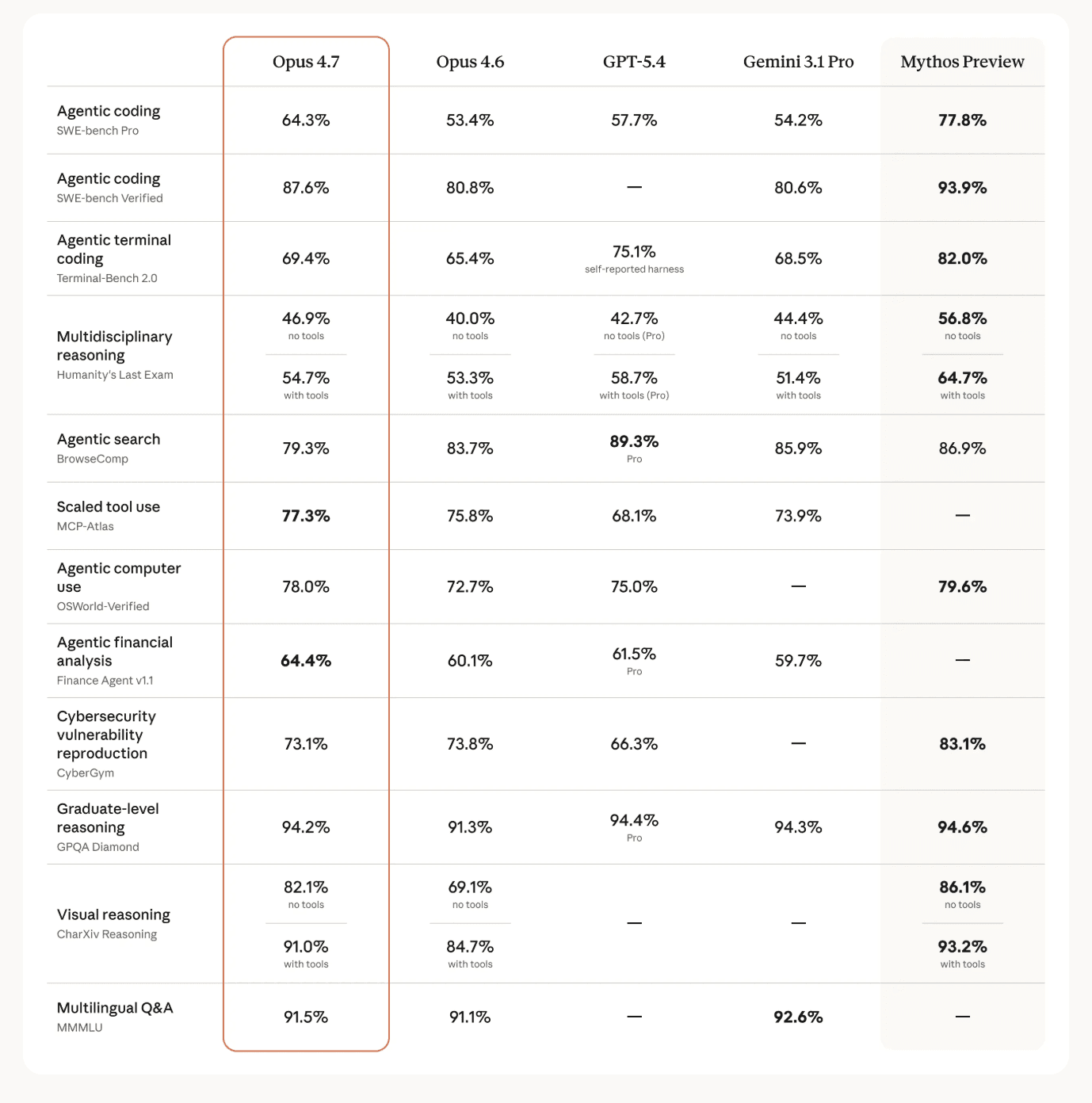
The benchmark improvements are substantial across virtually every category. Here are the numbers that matter most.
Agentic Coding
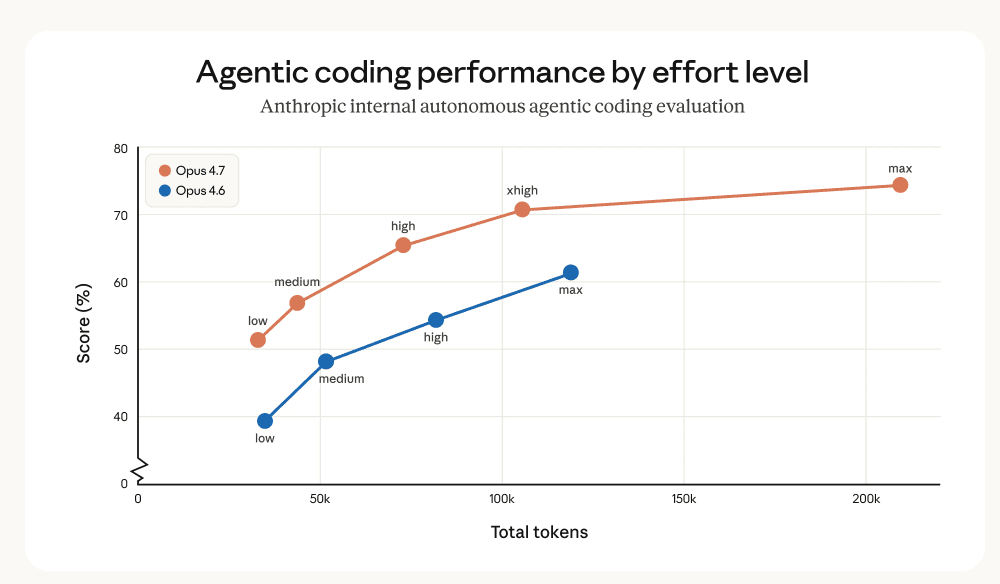
On SWE-bench Pro, Opus 4.7 hits 64.3%, up from 53.4% on Opus 4.6.[5] That is an 11-point jump on the benchmark most closely tied to real-world software engineering, which measures the ability to resolve actual GitHub issues end to end.
On SWE-bench Verified, Opus 4.7 scores 87.6%, versus 80.8% for Opus 4.6.[5] Another significant improvement on the verified version of the benchmark.
On CursorBench, Opus 4.7 is a meaningful jump in capabilities, clearing 70% versus Opus 4.6 at 58%.[4] That is a 12-point improvement on one of the most widely used developer-facing benchmarks for code editing.
On Anthropic's own 93-task coding benchmark, Claude Opus 4.7 lifted resolution by 13% over Opus 4.6, including four tasks neither Opus 4.6 nor Sonnet 4.6 could solve.[4]
Enterprise Knowledge Work
On Databricks' OfficeQA Pro, Claude Opus 4.7 shows meaningfully stronger document reasoning, with 21% fewer errors than Opus 4.6 when working with source information.[4]
Opus 4.7 scored higher than its predecessor on benchmarks including finance agent evaluations and GDPval-AA, which measures economically valuable knowledge work across finance and legal domains.[10]
Claude Opus 4.7 demonstrates strong substantive accuracy on BigLaw Bench for Harvey, scoring 90.9% at high effort with better reasoning calibration on review tables and noticeably smarter handling of ambiguous document editing tasks. It correctly distinguishes assignment provisions from change-of-control provisions, a task that has historically challenged frontier models.[4]
Computer Use and Visual Acuity
This is where the difference between the two models becomes dramatic. For the computer-use work that sits at the heart of XBOW's autonomous penetration testing, the new Claude Opus 4.7 is a step change: 98.5% on their visual-acuity benchmark versus 54.5% for Opus 4.6.[4] That is nearly a doubling in visual acuity accuracy, directly tied to the new high-resolution vision capabilities.
Task Completion and Tool Use
For complex multi-step workflows, Claude Opus 4.7 is a clear step up: plus 14% over Opus 4.6 at fewer tokens and a third of the tool errors.[4]
Claude Opus 4.7 is very strong and outperforms Opus 4.6 with a 10% to 15% lift in task success for Factory Droids, with fewer tool errors and more reliable follow-through on validation steps.[4]
For creators building AI-powered content workflows or developing applications that integrate AI models through APIs, these benchmark improvements translate into fewer retries, fewer errors, and higher quality outputs on the first pass.
Vision: From 1.15 MP to 3.75 MP
The vision upgrade is one of the most consequential technical changes. This is the first Claude model with high-resolution image support, more than tripling the pixel budget from 1.15 MP to 3.75 MP.[1]
Opus 4.7 processes images at resolutions up to 2,576 pixels on the long edge, more than three times the capacity of prior Claude models.[7]
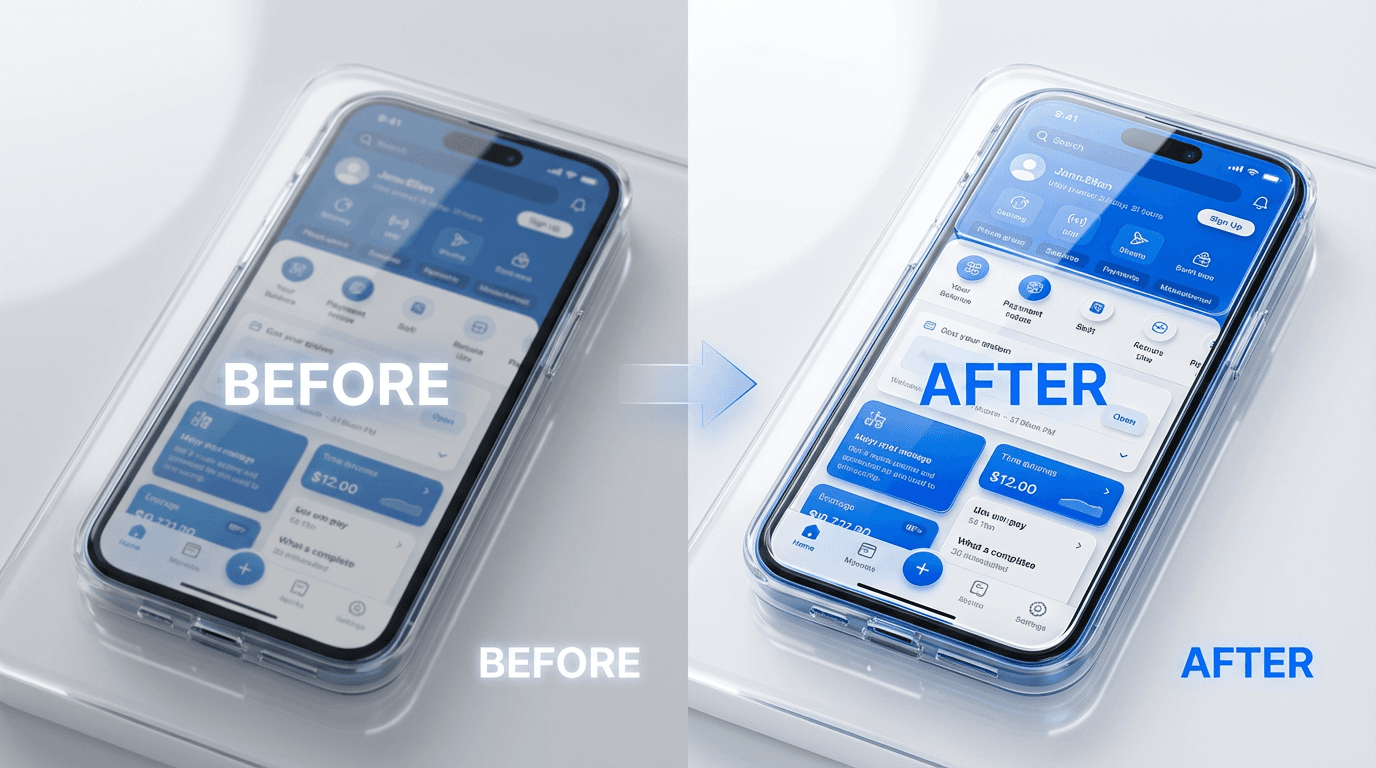
The model adds high-resolution image support, improving accuracy on charts, dense documents, and screen UIs where fine detail matters. The model is an upgrade from Opus 4.6 but may require prompting changes and harness tweaks to get the most out of the model.[5]
There is also a technical change worth noting for developers building computer-use applications. Opus 4.7 accepts images up to 2,576 pixels on the long edge (3.75 megapixels). Coordinates map 1:1 to actual pixels.[5] That 1:1 coordinate mapping combined with the higher resolution makes screen interaction significantly more reliable for automated workflows.
This matters for anyone working with visual AI tools. If you are generating YouTube thumbnails with AI or editing AI images, the underlying models used for image analysis and generation benefit directly from improved visual understanding. Creators working on thumbnail makeovers or building consistent visual styles across content should notice the quality difference.
The New Tokenizer: Same Price Per Token, Higher Token Counts
This is the most important cost consideration when migrating from Opus 4.6 to Opus 4.7. The per-token price has not changed, but the effective cost per request may go up.
Opus 4.7 uses a new tokenizer compared to previous models, contributing to its improved performance on a wide range of tasks. This new tokenizer may use up to 35% more tokens for the same fixed text.[2]
The updated model uses a new tokenizer that can result in 1.0 to 1.35 times more tokens for the same input depending on content type.[7]
The range is 1.0x to 1.35x, meaning some content types will see minimal impact while others will see a 35% increase. Test with the /v1/messages/count_tokens endpoint to measure the impact on your specific prompts.[1] Do this before switching production traffic.
The 1M context window has no long-context premium. A 900K-token request costs the same per-token rate as a 9K-token request.[1] That policy carries forward from Opus 4.6 and remains one of the most developer-friendly pricing decisions in the current AI landscape.
For teams running high-volume AI content generation, whether that involves creating AI-generated Shorts or producing batches of blog thumbnails, the tokenizer change means you should benchmark your actual workloads before migrating.
New Effort Level: xhigh
Opus 4.6 introduced the effort parameter with four levels: low, medium, high, and max. Opus 4.7 adds a fifth level between high and max.
The effort parameter controls how much reasoning Claude invests in a response. Opus 4.7 adds xhigh above the existing high, medium, and low levels. Use xhigh for coding and agentic tasks where quality matters more than latency. At this level, the model spends significantly more tokens on internal reasoning, resulting in better outputs for complex problems.[1]
There is an important default change to note. On Opus 4.7, the default effort is xhigh for all plans and providers. On Opus 4.6 and Sonnet 4.6, the default is high, or medium on Pro and Max.[2]
This default change means that out of the box, Opus 4.7 will spend more tokens on reasoning than Opus 4.6 did. If you are cost-sensitive and do not need the extra reasoning depth, explicitly set effort to high or medium in your API requests.
The full effort scale on Opus 4.7 now runs: low → medium → high → xhigh → max. Use high as the minimum for intelligence-sensitive work. Lower levels trade accuracy for speed and cost savings.[1]
Task Budgets: Token Allowance for Entire Agentic Loops
Task budgets are a new capability introduced in Opus 4.7, currently in public beta. This addresses a practical problem that every developer building AI agents has encountered.
Task budgets solve a problem that anyone building agents has hit: how do you prevent a multi-turn agentic loop from consuming an unbounded number of tokens? With task budgets, you give Claude a rough token target for the entire loop, including thinking, tool calls, tool results, and final output. The model sees a running countdown and uses it to prioritize work, skip low-value steps, and finish gracefully as the budget runs out.[1]
This is different from Opus 4.6, where cost control happened at the individual request level with max_tokens and thinking budget settings. Task budgets give you loop-level control, which is far more practical for agentic workflows that span multiple turns.
For content creators building automated pipelines, such as systems that generate AI music or batch-produce cinematic video clips, task budgets provide a way to keep AI generation costs predictable without micromanaging each step.
Breaking API Changes: What Will Stop Working
This is the section that matters most if you are running Opus 4.6 in production and planning to upgrade. Opus 4.7 ships breaking changes that require code updates if you're migrating from Opus 4.6.[1]
Extended Thinking Budgets: Removed
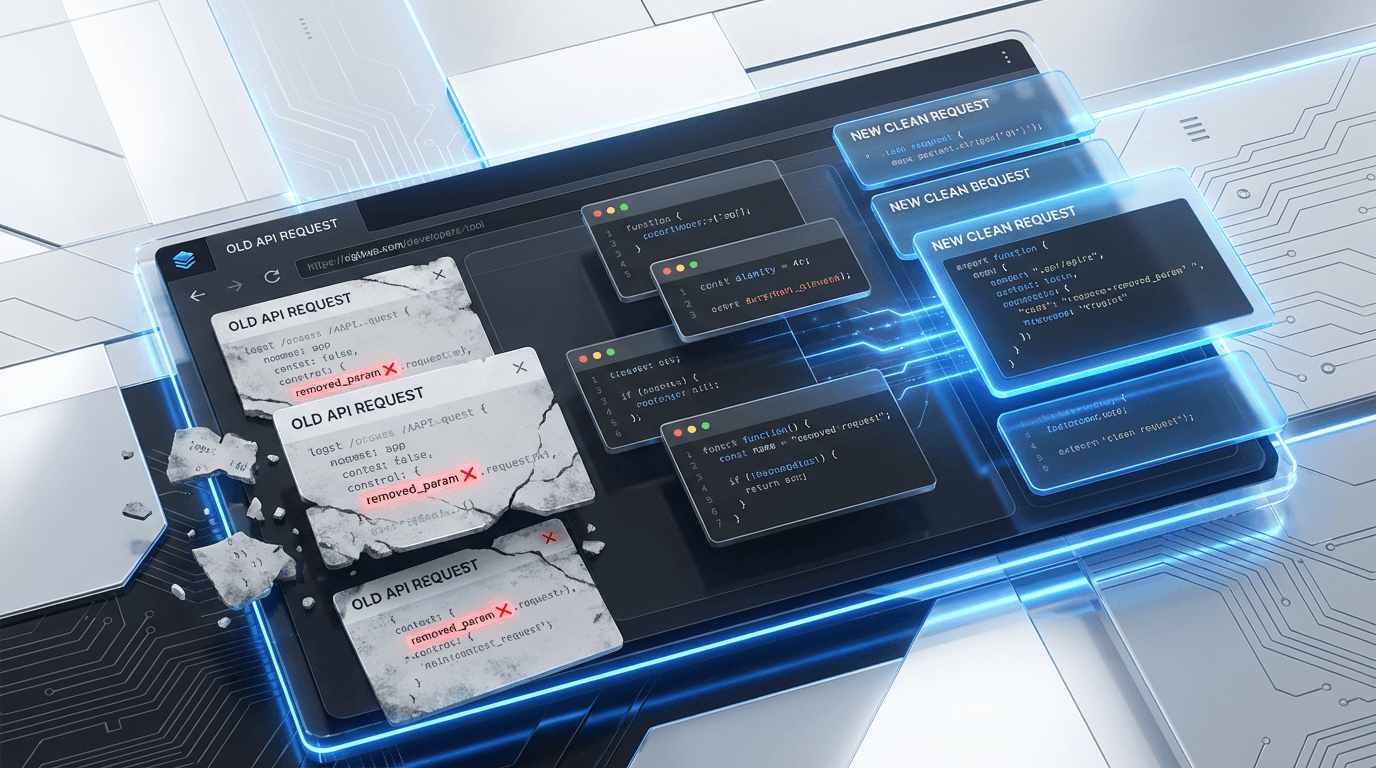
Extended thinking budgets are gone.[5] In Opus 4.6, thinking: {type: "enabled", budget_tokens: N} was deprecated but still functional. thinking: {type: "enabled", budget_tokens: N} is deprecated on Opus 4.6 and Sonnet 4.6. It is still functional but no longer recommended and will be removed in a future model release.[3]
In Opus 4.7, this deprecation has become a full removal. The thinking mode now only supports adaptive thinking, and it's off by default.[5] If your code still passes budget_tokens, it will error on Opus 4.7.
Opus 4.7 always uses adaptive reasoning. The fixed thinking budget mode and CLAUDE_CODE_DISABLE_ADAPTIVE_THINKING do not apply to it.[2]
Sampling Parameters: Removed
Sampling parameters (temperature, top_p, top_k) are gone.[5] This is a significant breaking change. If your application relies on temperature or top_p to control output variability, you will need to find alternative approaches when using Opus 4.7.
Migration Path
Switching your model ID from claude-opus-4-6 to claude-opus-4-7 is the easy part. The harder part is validating that your existing prompts, tool definitions, and error handling still work correctly after the breaking changes.[1]
Anthropic has published a migration guide, but the key steps are removing any budget_tokens references from your thinking configuration, removing any sampling parameters (temperature, top_p, top_k), switching to adaptive thinking, and testing token counts with the new tokenizer.
For teams building content creation tools or AI-powered Shorts generation, these API changes mean you need a testing phase before migrating production traffic. The models improve, but the breaking changes can cause immediate failures if your code uses any of the removed parameters.
Behavioral Changes: What Your Prompts Need to Know
Beyond the hard API breaks, Opus 4.7 introduces behavioral changes that may require prompt adjustments. These are not errors, but they will change the character of responses you get back.
These aren't API-breaking but may affect your prompts: More literal instruction following. The model won't silently generalize instructions from one item to another. Response length scales with task complexity instead of defaulting to a fixed verbosity. Fewer tool calls by default, preferring reasoning over action. Raise effort to increase tool usage. More direct, opinionated tone with less emoji and less validation-forward phrasing. Fewer subagents spawned by default in agentic workflows. If you've built prompting scaffolding to force Claude into specific behaviors (like "double-check the slide layout" or "give status updates"), try removing it. Opus 4.7 handles many of these patterns natively.[1]
Several of these changes deserve deeper attention.
The shift toward more literal instruction following means Opus 4.7 will do exactly what you ask rather than inferring broader intent. If your prompts worked on Opus 4.6 because the model generalized your instructions across multiple items, you may need to be more explicit with Opus 4.7.
The reduction in default tool calls is also notable. Code quality is noticeably improved, it's cutting out the meaningless wrapper functions and fallback scaffolding that used to pile up, and fixes its own code as it goes.[4] The model prefers reasoning through problems rather than immediately reaching for tools, which generally produces cleaner outputs but may require raising the effort level if your workflow depends on heavy tool usage.
For creators writing AI prompts for visual content, more literal instruction following is actually a positive change. It means detailed, specific prompts will be followed more precisely, which is exactly what you want when generating YouTube thumbnails or cinematic videos from text descriptions.
Self-Verification and Accuracy Improvements
One of the most meaningful technical improvements in Opus 4.7 is how the model handles uncertainty and verifies its own work.
It's phenomenal on one-shot coding tasks, more correct and complete than Opus 4.6, and noticeably more honest about its own limits.[4]
It even does proofs on systems code before starting work, which is new behavior we haven't seen from earlier Claude models.[4]
The model stays on track over longer horizons, with stronger performance over its full 1M token context window as it reasons through ambiguity and self-verifies its output.[5]
This self-verification behavior is particularly valuable for content creators who rely on AI for factual content. If you are writing blog posts that need to rank on Google or creating YouTube video descriptions for search, a model that identifies when it lacks sufficient information to answer accurately saves you from publishing incorrect claims.
Long-Running Tasks: Where Opus 4.7 Pulls Ahead
It carries work all the way through instead of stopping halfway, which is exactly what enterprise engineering teams need.[4]
Compared with Opus 4.6, it needs much less step-by-step guidance, helping us scale the internal agent workflows our engineering teams run.[4]
It passed Terminal Bench tasks that prior Claude models had failed, and worked through a tricky concurrency bug Opus 4.6 couldn't crack.[4]
Claude Opus 4.7 autonomously built a complete Rust text-to-speech engine from scratch — neural model, SIMD kernels, browser demo — then fed its own output through a speech recognizer to verify it matched the Python reference. Months of senior engineering, delivered autonomously. The step up from Opus 4.6 is clear, and the codebase is public.[4]
For content creators, the long-running task improvement means you can tackle larger projects in a single session. Building a complete 30-day YouTube Shorts content plan, writing scripts for an entire faceless YouTube channel, or generating comprehensive prompt packs all benefit from a model that maintains coherence and quality over extended sessions.
Feature-by-Feature Comparison Table
Here is the complete technical comparison between the two models across every dimension that matters for developers and creators.
Context Window: Both models support 1M tokens at standard pricing with no long-context premium.
Max Output Tokens: Both models offer 128K on the synchronous Messages API, and up to 300K via the Message Batches API with the beta header.
Vision Resolution: Opus 4.6 supports up to 1.15 megapixels, while Opus 4.7 supports up to 3.75 megapixels (2,576 pixels on the long edge).
Effort Levels: Opus 4.6 supports low, medium, high, and max. Opus 4.7 adds xhigh between high and max, giving five total levels.
Default Effort: Opus 4.6 defaults to high (or medium on Pro and Max plans). Opus 4.7 defaults to xhigh across all plans.
Thinking Mode: Opus 4.6 supports both adaptive thinking (recommended) and legacy manual thinking with budget_tokens (deprecated). Opus 4.7 only supports adaptive thinking, with no option to revert.
Sampling Parameters: Opus 4.6 supports temperature, top_p, and top_k. Opus 4.7 removes all sampling parameters.
Task Budgets: Not available on Opus 4.6. Available in public beta on Opus 4.7.
Tokenizer: Opus 4.6 uses the previous-generation tokenizer. Opus 4.7 uses a new tokenizer that may produce up to 35% more tokens for the same text.
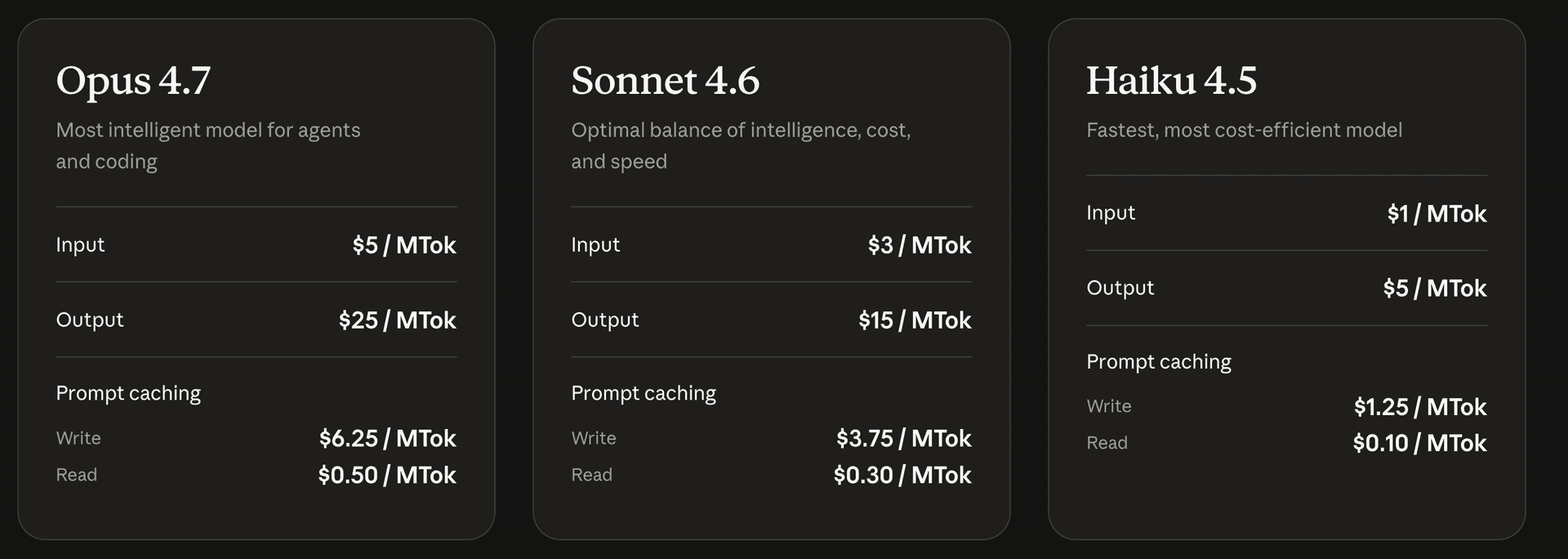
Pricing: Both models are priced at $5 per million input tokens and $25 per million output tokens, with the same prompt caching and batch processing discounts.
Prompt Caching: Both support up to 90% savings on cached prompts.
Batch Processing: Both support 50% discount via the Batch API.
Data Residency: Both support US-only inference at 1.1x pricing via the inference_geo parameter.
Cost Analysis: What the Tokenizer Change Actually Means
The pricing comparison between Opus 4.7 and Opus 4.6 looks identical on paper. Claude Opus 4.7 has the same pricing as Claude Opus 4.6 ($5/$25 per million tokens).[5]

But the new tokenizer changes the equation. Opus 4.7 maintains the same per-token pricing as Opus 4.6 and 4.5. The new tokenizer is the cost variable to watch. Because it may produce up to 35% more tokens for the same input text, your effective cost per request could increase even though the per-token price hasn't changed.[1]
In the worst case, a prompt that costs $5 per million tokens on Opus 4.6 could cost up to $6.75 per million tokens worth of text on Opus 4.7. In the best case, the tokenizer produces the same number of tokens and there is no cost difference.
The higher default effort level (xhigh vs high) also increases baseline token consumption because the model spends more tokens on internal reasoning. If you are coming from Opus 4.6 and want cost parity, explicitly set effort to high on Opus 4.7. Run the token counting endpoint on your typical prompts before migrating production workloads.
Pricing for Opus 4.7 starts at $5 per million input tokens and $25 per million output tokens, with up to 90% cost savings with prompt caching and 50% savings with batch processing.[4] Prompt caching becomes even more important with Opus 4.7 because the higher token counts amplify the savings from cached prompts.
When to Migrate and When to Stay on Opus 4.6
The migration decision depends on your specific use case and how heavily you rely on features that changed or were removed.
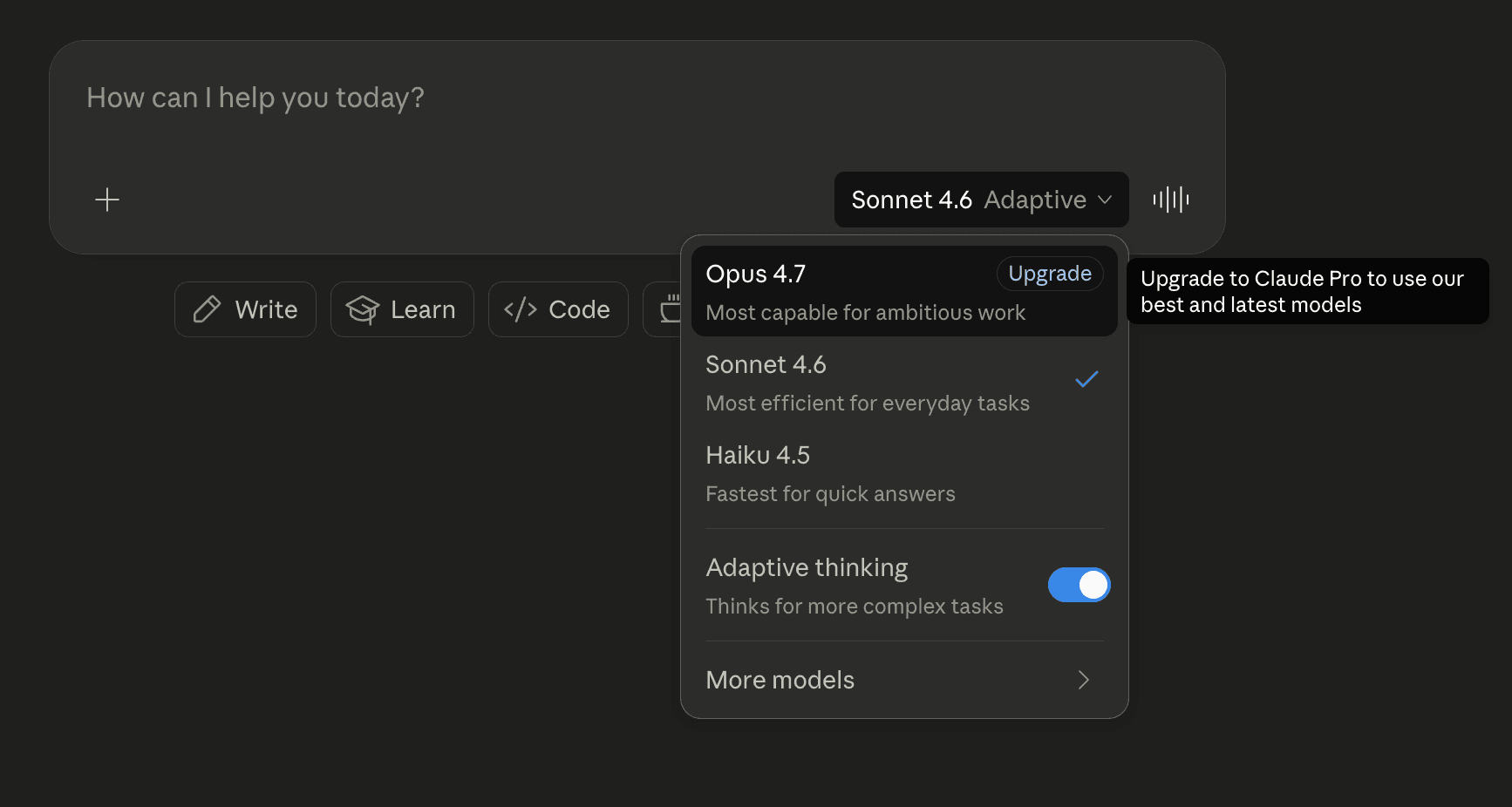
Migrate to Opus 4.7 If
You are building autonomous coding agents or agentic workflows where quality and task completion matter more than per-request cost. The benchmark improvements across SWE-bench, CursorBench, and Terminal-Bench are significant, and the task budget feature gives you new cost-control mechanisms at the loop level.
You need high-resolution image processing. The 3x improvement in vision resolution makes Opus 4.7 substantially better for document analysis, UI understanding, chart reading, and any workflow involving visual content.
You build content at scale and need better instruction following. The more literal instruction following in Opus 4.7 means fewer revisions and fewer cases where the model drifts from your specifications. This is valuable for creators generating AI thumbnail prompts, writing video scripts, or building AI-powered content pipelines.
You want the model that self-verifies. For enterprise and professional knowledge work, the 21% reduction in document reasoning errors and the model's willingness to flag when data is missing or ambiguous is a meaningful quality improvement.
Stay on Opus 4.6 If
Your application depends heavily on sampling parameters like temperature for output variability. These are completely removed in Opus 4.7 with no workaround.
You have optimized prompt pipelines that rely on precise token budgets. The new tokenizer will change your token counts, and if you have fine-tuned your max_tokens settings or cost calculations, you will need to recalibrate everything.
You are running high-volume, cost-sensitive workloads and the tokenizer increase would materially impact your budget.
Over the coming weeks, Opus 4.7 will replace Opus 4.5 and Opus 4.6 in the model picker for Copilot Pro+.[7] This signals that Anthropic and its partners are moving toward Opus 4.7 as the standard, so planning your migration sooner rather than later is advisable even if you stay on 4.6 temporarily.
How This Affects AI Content Creation Tools
Improvements in underlying AI models cascade through every tool built on top of them. When models get better at instruction following, visual understanding, and multi-step task completion, the content you generate through platforms like Miraflow AI becomes more accurate and more aligned with your creative vision.
Specifically, the improvements in Opus 4.7 affect content creation workflows in several ways. Better instruction following means your video prompts for cinematic generation will produce results that more closely match what you described. The improved vision capabilities help with any workflow that involves analyzing existing images, such as image inpainting or generating thumbnails based on reference images. And the self-verification improvements mean you get more reliable factual content when using AI for YouTube titles, descriptions, and SEO-focused blog posts.
Creators working with the Text2Shorts generator benefit because script generation, scene description, and visual prompting all improve when the underlying model follows instructions more precisely and handles multi-step workflows more reliably. The same applies to the AI Music Generator, where better prompt understanding translates to music that more closely matches your style and mood descriptions.
Migration Checklist for Developers
If you are upgrading from Opus 4.6 to Opus 4.7, work through these steps before switching production traffic.
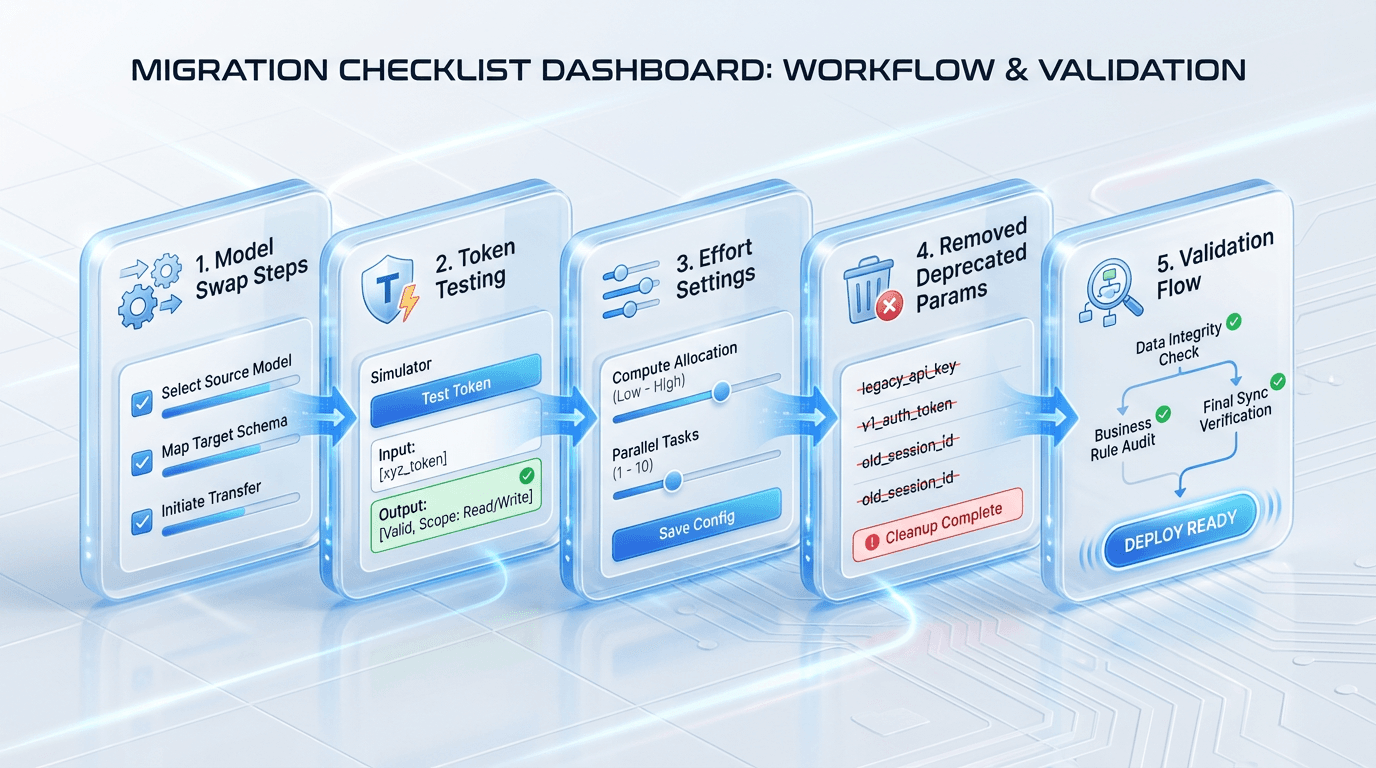
Remove any thinking: {type: "enabled", budget_tokens: N} configurations. Replace with thinking: {type: "adaptive"} and use the effort parameter to control reasoning depth.
Remove all sampling parameters (temperature, top_p, top_k) from your API requests. If you need output variability, explore prompt-based techniques instead.
Run the /v1/messages/count_tokens endpoint on your typical prompts to measure the token count difference from the new tokenizer.
Review your max_tokens settings. If the new tokenizer produces 20 to 35% more tokens for your content, your existing max_tokens limits may truncate responses that previously fit comfortably.
Test prompts that rely on the model generalizing instructions. Opus 4.7 follows instructions more literally, so prompts that worked by implication on 4.6 may need to be more explicit.
If you built scaffolding that forces specific behaviors like self-checking or status updates, try removing it. If you've built prompting scaffolding to force Claude into specific behaviors (like "double-check the slide layout" or "give status updates"), try removing it. Opus 4.7 handles many of these patterns natively.[1]
Consider setting effort explicitly. The default changed from high (Opus 4.6) to xhigh (Opus 4.7), which means more tokens spent on reasoning by default. Set it to high if you want cost-equivalent behavior.
Run your full test suite against both claude-opus-4-6 and claude-opus-4-7 side by side. Run the same test scenarios against claude-opus-4-6 and claude-opus-4-7 side by side. Check for differences in token counts, response structure, and output quality.[1]
Where Opus 4.6 Still Had the Edge (That Opus 4.7 Now Surpasses)
One of the reasons Opus 4.6 was already a strong model is that it introduced several foundational features that Opus 4.7 inherits and builds upon. Claude Opus 4.6 and Sonnet 4.6 both support a 1M token context window, extended thinking, and all existing Claude API features. Opus 4.6 offers 128k max output tokens; Sonnet 4.6 offers 64k max output tokens.[3]
Opus 4.6 also introduced adaptive thinking, compaction for infinite conversations, fast mode at 2.5x speed for premium pricing, web search with dynamic filtering, and data residency controls. All of these features carry forward into Opus 4.7.
Fast mode (speed: "fast") delivers significantly faster output token generation for Opus models. Fast mode is up to 2.5x as fast at premium pricing ($30/$150 per MTok). This is the same model running with faster inference (no change to intelligence or capabilities).[3]
Compaction provides automatic, server-side context summarization, enabling effectively infinite conversations. When context approaches the window limit, the API automatically summarizes earlier parts of the conversation.[3]
The point is that Opus 4.7 is not a replacement that removes features from 4.6. It is an additive upgrade that keeps everything Opus 4.6 introduced while adding new capabilities (xhigh effort, task budgets, high-res vision) and removing only the deprecated features (manual thinking budgets, sampling parameters) that were already marked for removal.
Frequently Asked Questions
Is Claude Opus 4.7 a drop-in replacement for Opus 4.6?
Not entirely. While the model ID swap is simple (claude-opus-4-6 to claude-opus-4-7), there are breaking API changes. Extended thinking budgets and sampling parameters have been removed, and the new tokenizer may produce up to 35% more tokens for the same text. Test your workloads before migrating production traffic.
Does Opus 4.7 cost more than Opus 4.6?
The per-token price is identical at $5/$25 per million tokens. However, the new tokenizer may produce more tokens for the same input, and the default effort level increased from high to xhigh, which means more reasoning tokens by default. Your effective cost per request could increase by 10 to 35% depending on content type and effort level settings.
Can I still use temperature and top_p with Opus 4.7?
No. All sampling parameters (temperature, top_p, top_k) have been removed from Opus 4.7. If your application depends on these parameters for output variability, you will need to stay on Opus 4.6 or implement prompt-based alternatives.
What is the xhigh effort level?
The xhigh effort level is a new option between high and max that gives the model a larger reasoning budget than high but keeps costs lower than max. It is the default on Opus 4.7 and is recommended for coding, agentic tasks, and complex reasoning work.
Should I wait to migrate?
If you are running stable production workloads on Opus 4.6 with no issues, there is no emergency to migrate today. However, the trajectory is clear, as GitHub Copilot is already replacing 4.5 and 4.6 with 4.7, and the model improvements are significant enough that most teams should plan their migration within the next few weeks.
How does the vision improvement affect AI content creation?
The 3x increase in vision resolution (1.15 MP to 3.75 MP) improves any workflow that involves analyzing or processing images.
What are task budgets and when should I use them?
Task budgets are a new feature in public beta that let you set a token allowance for an entire agentic loop rather than a single request. They are useful for autonomous agents, multi-step content generation pipelines, and any workflow where you need to control costs across multiple turns of interaction.
Is Claude Mythos Preview better than Opus 4.7?
Yes, but it is not publicly available. While Opus 4.7 represents an advancement, it remains less capable than Claude Mythos Preview, Anthropic's most powerful model. Mythos Preview continues to have limited release due to safety concerns outlined in Project Glasswing.[7]
Conclusion
Claude Opus 4.7 is a meaningful technical upgrade over Opus 4.6, with significant improvements in coding benchmarks, vision capabilities, instruction following, and long-running task performance. The 11-point jump on SWE-bench Pro, the 3x vision resolution increase, and the 21% reduction in document reasoning errors represent real quality gains that translate into better outputs across every use case.
The trade-offs are the new tokenizer (up to 35% more tokens per request), breaking API changes (no more sampling parameters or manual thinking budgets), and behavioral shifts (more literal instruction following, different default effort level) that require testing and possible prompt adjustments.
For most developers and creators, the upgrade is worth it. The quality improvements reduce downstream rework, the task budgets give you better cost control for agentic workflows, and the self-verification improvements mean you spend less time catching AI mistakes. Start by testing your specific workloads, measure the tokenizer impact, remove any deprecated parameters, and migrate when your test results confirm the improvement.
If you are building AI-powered content workflows, the model improvements cascade through every tool in the pipeline. Start exploring what frontier AI can do inside Miraflow AI, where you can generate AI images, YouTube thumbnails, Shorts, cinematic videos, and AI music from a single platform, all powered by the latest generation of AI models.