The AI Cold War Is Here: Meta, Manus, and What US-China Decoupling Means for AI Tools You Use

Written by
Jay Kim
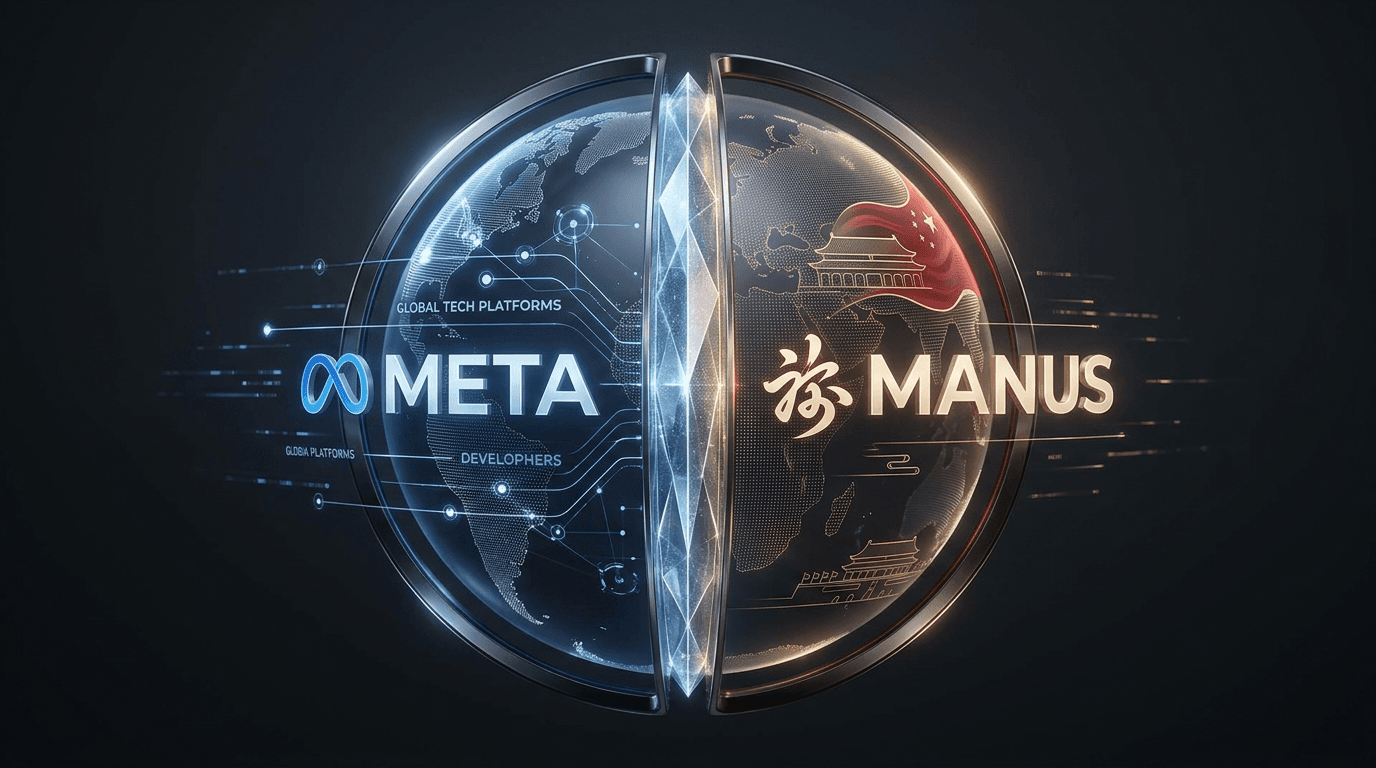
China blocked Meta's $2B Manus AI deal. Here's what the US-China AI cold war means for the tools, models, and platforms creators use every day in 2026.
On April 27, 2026, China's National Development and Reform Commission posted a single sentence that shook the global AI industry. The country's top macroeconomic regulator announced that it had "decided to block the foreign acquisition of the Manus project and require the parties to unwind the deal."[5]
That deal was Meta's $2 billion acquisition of Manus, one of the most impressive autonomous AI agents ever built. And the fallout from this decision reaches far beyond two companies. It directly affects the tools, platforms, and AI models that creators and developers rely on every single day.
If you use AI image generators, AI video tools, AI music creators, or any content creation platform powered by frontier models, this story matters to you. The AI ecosystem is splitting along geopolitical lines, and the tools you depend on could look very different in six months.
This post explains what happened, why it happened, what it means for the broader AI landscape, and how content creators should think about the tools they choose in a world where AI is becoming a geopolitical weapon.
What Is Manus and Why Did Meta Want It?
Before the acquisition drama, Manus was already one of the most talked-about AI products on the planet. Manus (meaning "hand" in Latin) is an autonomous artificial intelligence agent developed by Butterfly Effect, a company founded in China and based in Singapore.[3]
What made Manus different from tools like ChatGPT or Claude was its level of autonomy. Manus AI is recognized as the world's first fully autonomous AI agent, transforming AI-driven automation by executing complex tasks independently with minimal human intervention. Unlike conventional AI chatbots that rely on human prompts, Manus AI integrates multiple AI models to analyze, plan, and execute workflows autonomously.[2]
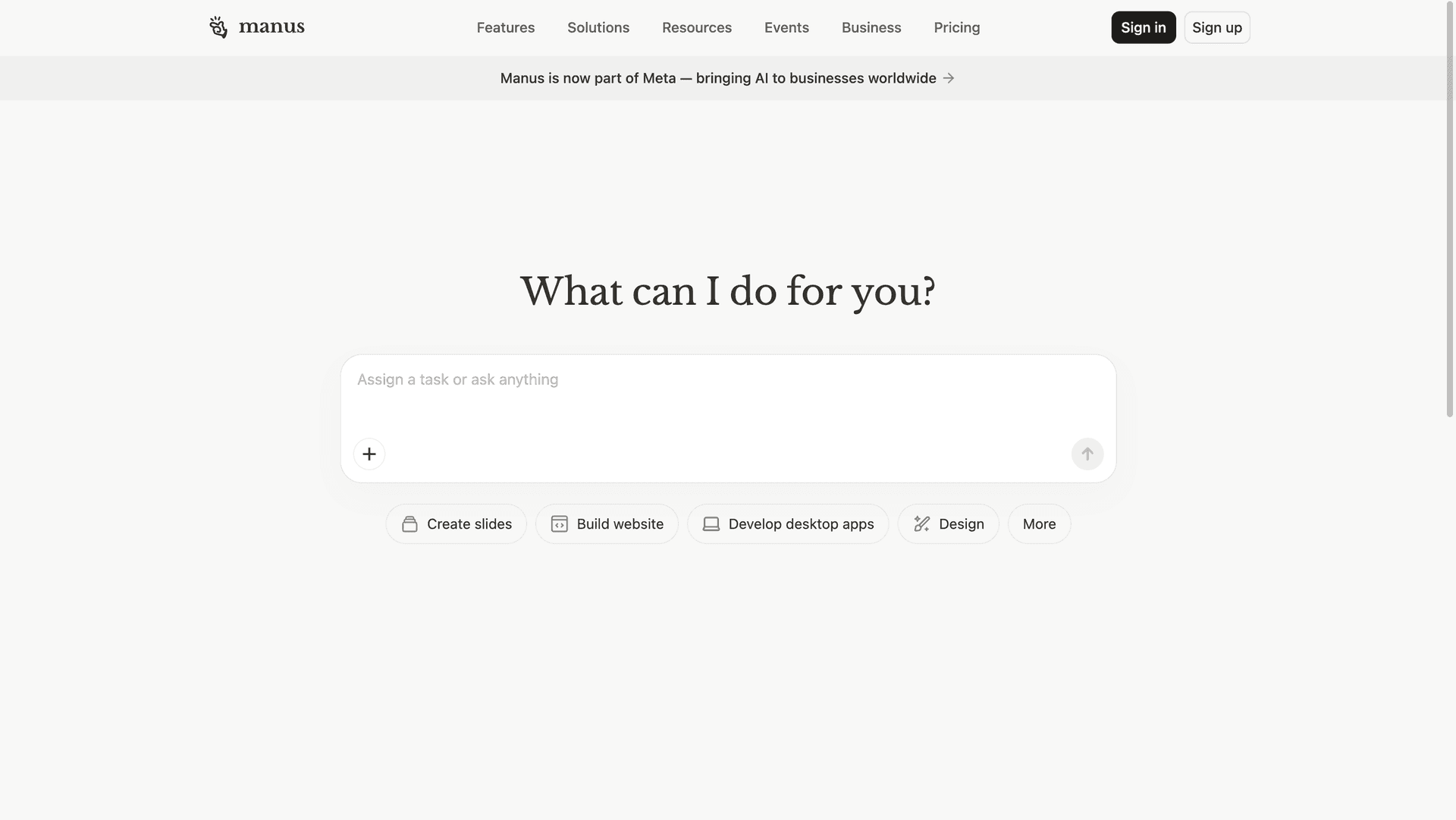
In practical terms, you could give Manus a goal and walk away. Manus is a fully autonomous AI system designed to run asynchronously in the cloud, requiring no repeated prompts and no babysitting. It handles time-intensive tasks like sifting through a folder of resumes, carefully analyzing each one and compiling detailed rankings in multiple file outputs.[7]
The technology was genuinely impressive. The Chinese AI agent showed strong performance in real-world execution and even surpassed OpenAI's Deep Research agent in GAIA benchmarks across multiple difficulty levels.[2]
For Meta, acquiring Manus meant getting world-class agentic AI technology to integrate across its entire product suite, from Meta AI assistant to business automation tools. For Meta, the blocked acquisition could represent a missed opportunity to strengthen its AI capabilities as the race for the technology with rivals like Google and OpenAI picks up.[8]
The AI agent space is one of the fastest-growing areas in artificial intelligence, and tools that can autonomously handle complex workflows are becoming essential for everything from content creation to enterprise operations. If you have been following the evolution of AI-powered content workflows or the rise of faceless YouTube channels built with AI, you already understand how quickly autonomous AI agents are reshaping creative work.
What Actually Happened: The Timeline
The story of Meta and Manus is a case study in how fast geopolitics can disrupt AI business.
Manus first grabbed the global spotlight in early 2025 when, in the wake of DeepSeek's shock to global markets, its parent company (then called Butterfly Effect) unveiled an AI agent that its founders promised was "truly autonomous."[5]
Then in July 2025, the company announced it had moved its office from Beijing, where it was founded, to Singapore, a popular destination for Chinese companies trying to distance themselves from their country of origin. Six months later in December, Meta announced its acquisition of Manus and said the startup would shut down its operations in China.[5]
What happened next moved quickly. The deal garnered scrutiny from both China and Washington, with Beijing launching a probe into the transaction in January.[1]
Chinese authorities quickly said they would review the deal, noting that the startup still relied on Chinese talent and technology. The Chinese government has also barred the two Manus cofounders from leaving China, according to the Financial Times.[5]
Then on April 27, 2026, the hammer dropped. China said it has decided to block Meta's $2 billion acquisition of Manus, a Singaporean AI startup with Chinese roots.[1]
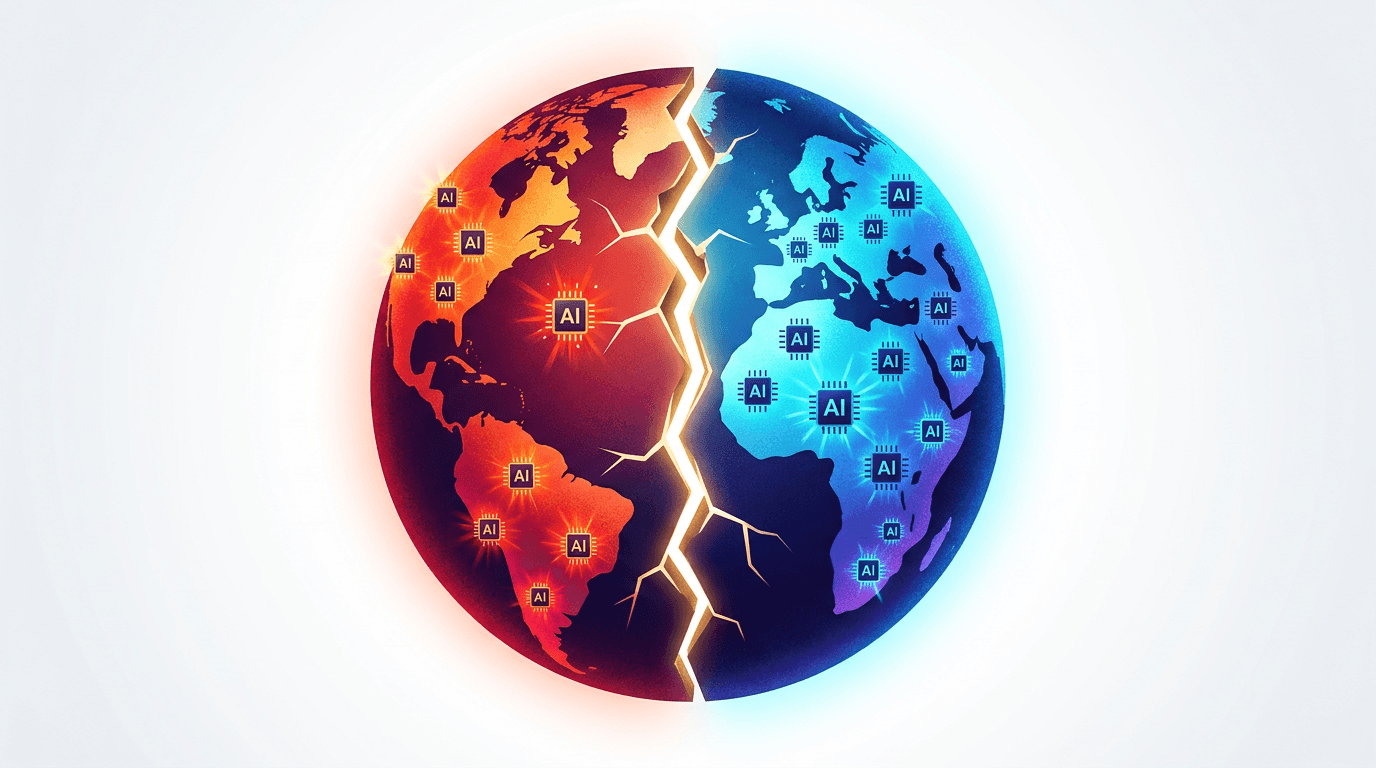
According to multiple reports, the decision to block the acquisition was elevated beyond economic regulators to China's National Security Commission, the Communist Party body chaired by Xi Jinping that oversees national security strategy.[3]
This was not a routine regulatory decision. It was a direct signal from the highest levels of the Chinese government that AI technology is now treated as a core national security asset.
Why China Blocked the Deal
The official reason was straightforward: the acquisition violated Chinese laws and regulations related to export controls and technology transfer. But the real motivations run much deeper.
The sequence of events surrounding the acquisition makes clear that the issue was never simply about antitrust law. Beijing has long treated advanced technology transactions as matters of national security, even when the legal framing rests in competition policy.[3]
Chinese officials reviewing the acquisition reportedly described it as a "conspiratorial" attempt to hollow out the country's technology base, language that should scare anyone seeking deals in this space.[3]
The Manus case also exposed the limits of corporate restructuring as a way to sidestep geopolitical tensions. In recent years, several Chinese technology firms have relocated corporate headquarters to Singapore seeking to present themselves as global companies rather than Chinese firms. But the Manus episode illustrates the limits of that strategy. Simply shifting corporate registration offshore does not place a company beyond China's extraterritorial control and regulatory reach if its technology, founders, or research ecosystem remain tied to the mainland.[3]
The deeper context matters too. With a chilling 54-character decree from the top state planner, Beijing demonstrated its determination to prevent the transfer of sensitive technology to geopolitical foes at all costs. That follows a recent decision to bar major tech firms including ByteDance and Moonshot AI from taking American capital without approval.[4]
In other words, this was never just about one deal. It was about China establishing a clear boundary: frontier AI technology developed with Chinese talent, on Chinese soil, stays under Chinese control, regardless of where the company is incorporated.
The Bigger Picture: US-China AI Decoupling Is Accelerating
The Meta-Manus situation is part of a much larger trend that has been building for years but reached a tipping point in 2026.

The blocked deal shows how quickly U.S. and Chinese AI ecosystems are decoupling, as both Washington and Beijing now seek to maintain control of strategic technologies and prevent them from leaking to the other.[5]
Beijing's decision reinforces the bifurcation of global technology development as US-China tension heats up, and underscores the increasingly challenging environment for cross-border investments in critical sectors such as AI and semiconductors.[8]
This is happening on both sides of the Pacific. On the U.S. side, the Decoupling America's Artificial Intelligence Capabilities from China Act was proposed in the Senate, which would prohibit the export of AI technology and intellectual property to China. The NDAA effectively bans DeepSeek's namesake application across national security systems in the intelligence community, and Section 1532 enacts a similar prohibition across the Defense Department with broader scope.[5]
On China's side, restrictions are equally aggressive. China's 'Delete A' project aims to remove American technology from the supply chains of Chinese firms. This has meant a number of government directives and regulator encouragements for Chinese companies to avoid using American technology.[7]
And the Stanford HAI 2026 AI Index Report confirmed what many suspected: the report documents a world in which America's lead over Chinese innovation has all but evaporated. One of the most striking takeaways is the way China has reportedly erased the AI performance gap between itself and the U.S.[1]
For creators and developers, this means the AI tools landscape is fragmenting. Models, APIs, and platforms that work seamlessly today could face restrictions, shutdowns, or access limitations tomorrow based purely on where they were built.
How This Affects the AI Tools Creators Use Every Day
You might be thinking: I am just a content creator making YouTube Shorts or Instagram posts. How does geopolitics affect me?
More than you would expect. Here is how the US-China AI split is already touching the tools and workflows creators depend on.
AI image models are caught in the crossfire. The most popular AI image generators use models built by companies on both sides of the divide. Google's Nano Banana, OpenAI's GPT Image models, and various open-source alternatives from Chinese labs all compete on platforms like LM Arena. If export controls tighten further, some of these models could become unavailable in certain regions.
AI video generation is model-dependent. Tools that generate cinematic video clips or AI Shorts rely on specific underlying models. If a model's developer faces sanctions, export restrictions, or is forced to shut down operations in certain markets, the tools built on top of those models break too.
Open-source AI is not immune. DeepSeek, one of the most capable open-source model families, already faces bans on government devices in the US, Australia, Taiwan, and other countries. The list of DeepSeek restrictions continues to grow, with Italy being the first country to act, blocking DeepSeek from app stores after the company failed to explain its data practices to GDPR regulators.[4]
TikTok's ownership restructuring foreshadows what could happen to other platforms. The TikTok deal, finalized in January 2026, places U.S. data and algorithm management under American control while ByteDance retains a minority stake in the platform. On January 22, 2026, the newly formed TikTok USDS Joint Venture LLC took control of TikTok's U.S. platform.[9] If a social media platform can be forced to restructure its entire technology stack based on national origin, AI tools built by Chinese companies could face similar pressure.
The practical question for creators is simple: if the AI model powering your favorite thumbnail maker, video generator, or music tool gets caught in the crossfire, what happens to your workflow?
What Manus Means for the Future of AI Agents
The Manus block has implications that go beyond geopolitics. It also sends a signal about the future of AI agent technology.
An analyst noted that "China is showing the world that it is willing to play hardball when it comes to AI talents and capabilities, which the country views as a core national security asset." He added that "it is strongly indicative of what Chinese authorities may do going forward regarding acquisitions involving Chinese deep-tech companies." Beijing's acquisition ban could deter similar acquisition plans by U.S. tech giants going forward.[9]
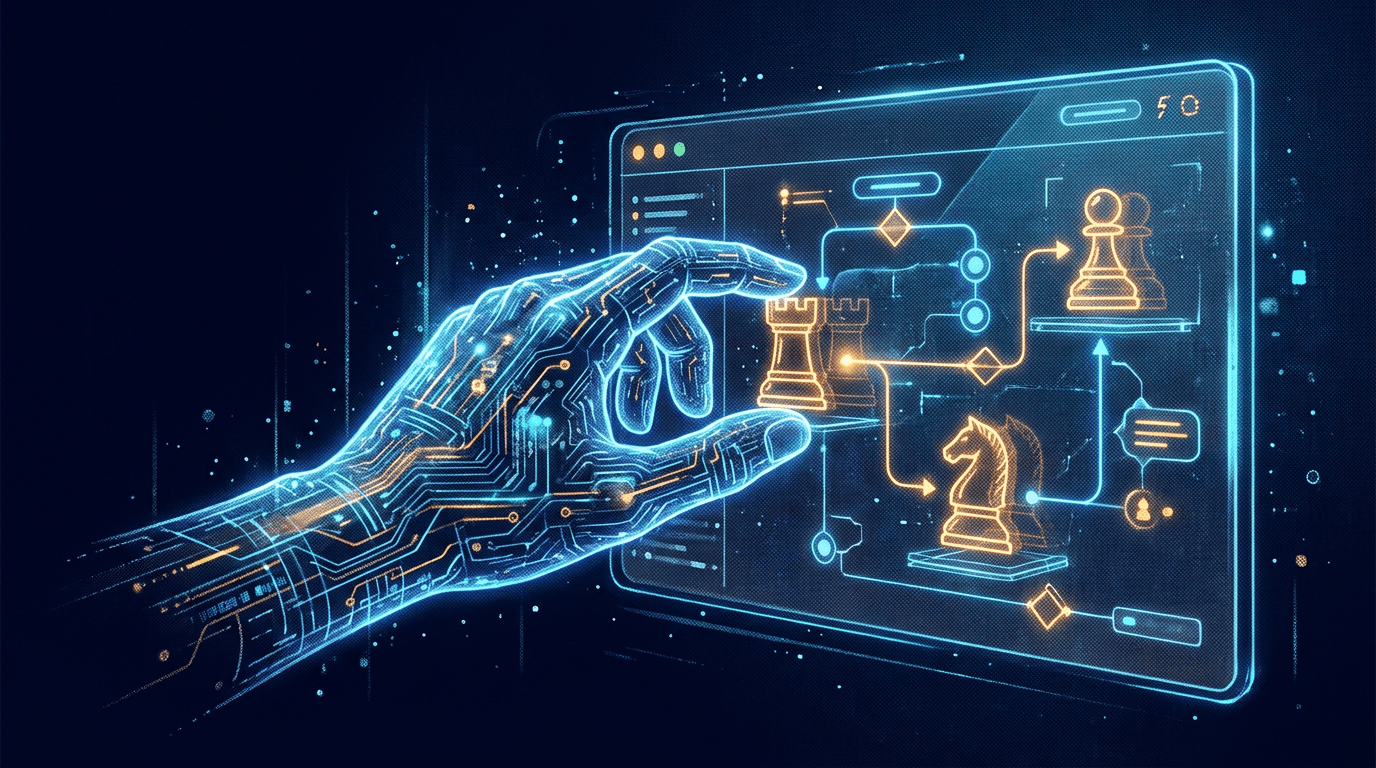
This matters because AI agents, the kind of autonomous systems that Manus pioneered, are where the entire AI industry is heading. Every major lab is building agent capabilities. OpenAI, Anthropic, Google, and dozens of startups are racing to build AI systems that can execute multi-step tasks without human intervention.
If AI agent technology becomes classified as a strategic national asset (which is exactly what China just signaled), then the most advanced AI tools could become region-locked. A creator in the US might not have access to the best Chinese AI agents, and a creator in China might lose access to American AI platforms.
For creators building workflows around AI tools like Text2Shorts for YouTube content, AI image generators for thumbnails, or AI music generators for background tracks, the lesson is clear: build your workflows on platforms that aggregate multiple models and are not dependent on a single provider from a single country.
The Chilling Effect on AI Startups
The Manus block does more than stop one deal. It creates a chilling effect on the entire AI startup ecosystem.
The AI startup Manus, once hailed as a breakthrough that would challenge Silicon Valley's dominance, is turning into a cautionary tale for Chinese entrepreneurs after Beijing authorities ordered Meta Platforms Inc. to unwind its $2 billion takeover of the company.[4]
Analysts have previously warned that a heavy-handed response from Beijing, such as annulling the deal, could dampen entrepreneurs with global ambitions and encourage talent to start businesses abroad from the outset.[8]
The decision to undo the acquisition does little to keep Manus's knowledge inside China, since Meta has had months to absorb the company's data and systems. Plus, there is no obvious mechanism to unwind those transactions: Manus's investors were already paid, meaning that Meta will likely have to eat the loss.[10]
The irony is striking. Beijing blocked the deal to prevent Chinese AI technology from being transferred to an American company. But the technology has likely already been transferred. Soon after announcing the acquisition in late December, Meta had integrated Manus into its internal systems and executives of the startup had joined the American tech giant.[8]
This creates a paradox where enforcement comes too late to achieve its stated goal but early enough to damage investor confidence and entrepreneurial ambition in the Chinese AI ecosystem.
For the global AI tool market, this means fewer cross-border deals, more fragmentation, and potentially slower innovation as companies avoid the regulatory minefields that come with building technology that could be classified as strategically sensitive.
What This Means for Content Creators and Marketers
If you are a creator or marketer who relies on AI tools for your daily workflow, here is what you should be thinking about right now.
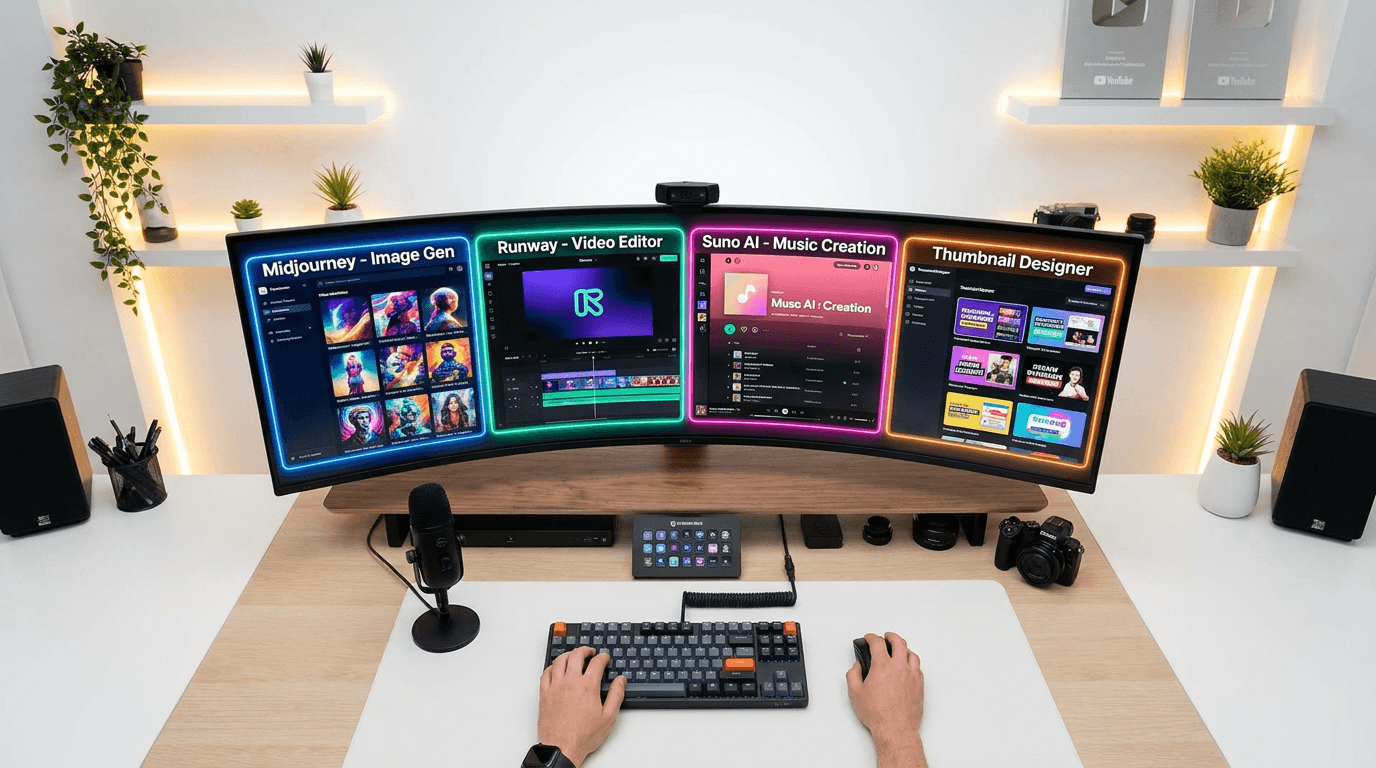
Diversify your tool stack. Relying entirely on tools powered by a single AI model or a single company is a risk that grows every month. The creators who will be most resilient are those who use platforms that offer access to multiple models and can switch between them when needed. Tools like Miraflow AI are built around this principle, giving creators access to image generation, video creation, thumbnail design, music generation, and more from a single browser-based platform.
Pay attention to where your AI tools are built. This is not about nationalism. It is about practical risk management. If a tool depends on a model from a company that could face export restrictions, sanctions, or forced restructuring, your workflow could break overnight. Knowing the origin and dependencies of your tools helps you plan ahead.
Watch for AI content labeling requirements. The geopolitical tension around AI is driving new regulations about AI-generated content disclosure. TikTok has implemented the most comprehensive AI content disclosure framework of any social media platform. TikTok's updated Community Guidelines on Synthetic and Manipulated Media now require explicit disclosure of AI-generated content across all formats, including organic posts, branded content, and paid advertisements.[1] Knowing the rules is essential whether you are creating AI-generated YouTube Shorts or Instagram content with AI images.
Build skills that transfer across tools. Prompt engineering, visual composition, scripting, and content strategy are skills that work regardless of which specific AI model powers your tools. If you learn to write effective prompts for AI thumbnails, those skills translate across platforms. If you understand what makes YouTube Shorts go viral, that knowledge stays relevant no matter which video generator you use.
The Broader Pattern: AI Tools That Have Already Been Affected
Manus is the highest-profile case, but it follows a pattern of AI tools and platforms being disrupted by geopolitical forces.
DeepSeek faced bans across multiple countries and institutions. Within weeks of its launch, governments began banning DeepSeek from official devices. Security researchers uncovered troubling vulnerabilities. Privacy watchdogs launched investigations across multiple continents.[4]
TikTok went through a full ownership restructuring to continue operating in the United States. After a six-year back-and-forth between U.S. lawmakers, ByteDance executives, and Chinese regulators, the United States has taken control of a U.S. version of TikTok. As part of the deal, the USDS Joint Venture LLC, consisting of Oracle and investors Silver Lake and MGX, created and will manage U.S. user data and changes to the content recommendation algorithm leased from ByteDance. The deal also indefinitely secures TikTok's availability to over 200 million users in the United States.[9]
Moonshot AI and ByteDance have been barred from taking American capital without Chinese government approval, adding another layer of friction to the global AI investment ecosystem.
These are not isolated incidents. They represent a structural shift in how AI technology is governed, funded, and distributed globally. Creators who understand this shift can make smarter decisions about which tools to invest their time in.
How to Build a Geopolitics-Proof Content Workflow
Given everything we have covered, here is a practical approach to building a content workflow that can survive the AI cold war.
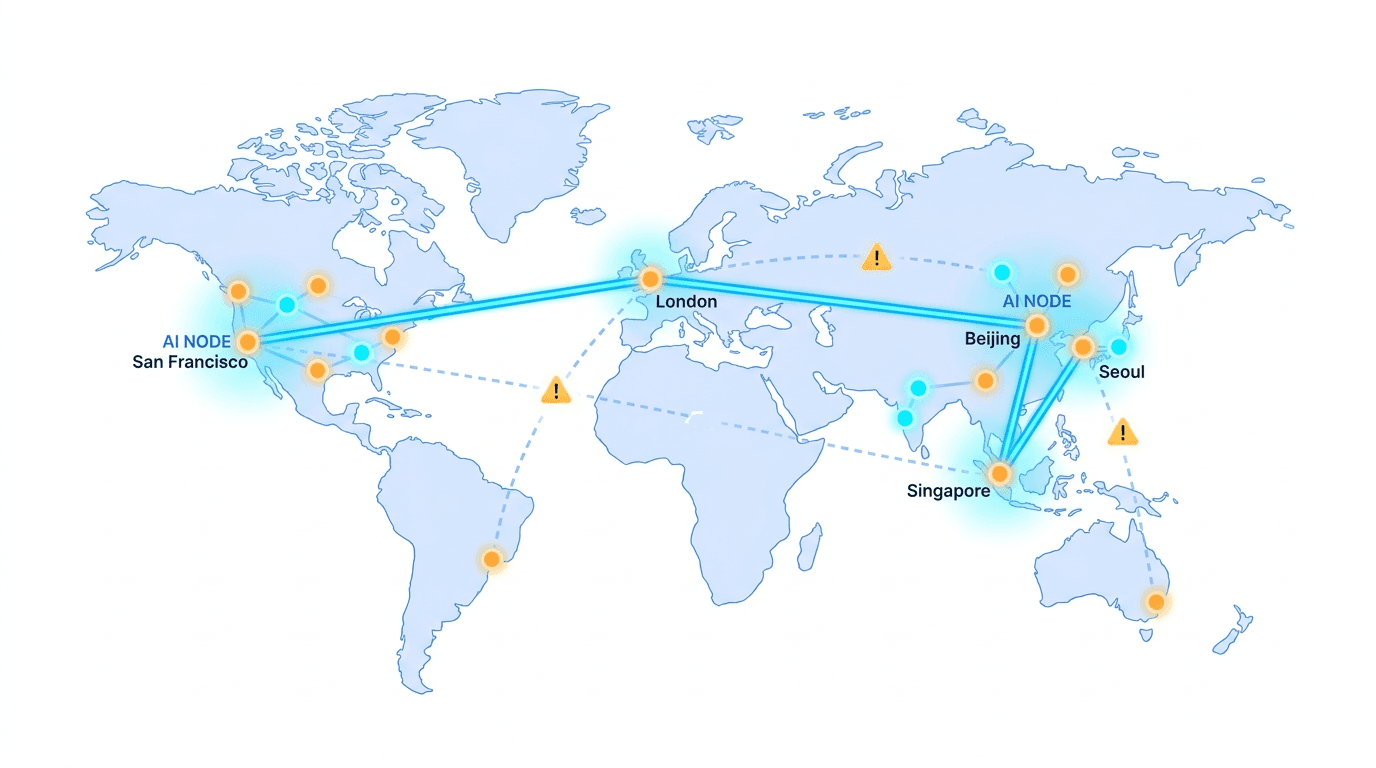
Use platform-level tools instead of model-level tools. Instead of building your entire workflow around one specific AI model (which could be restricted, deprecated, or sanctioned), use platforms that integrate multiple models and can swap backends without disrupting your workflow. Miraflow AI lets you generate AI images, YouTube thumbnails, cinematic videos, AI Shorts, and AI music from a single platform, which means your workflow stays intact even if the underlying models change.
Save your prompts and templates. If you have developed Nano Banana prompts that produce great results, thumbnail prompt templates, or video scripts that work well, save them in your own library. Good prompts are transferable across models and platforms. When one tool changes, you can port your prompt library to another.
Keep your content strategy independent of any single tool. The YouTube Shorts algorithm rewards retention, hooks, and viewer satisfaction regardless of how the content was produced. The best practices for viral Shorts and the formats that earn real RPM are driven by viewer behavior, not by which AI model generated the visuals.
Stay informed about regulations. AI content labeling rules, monetization policies for AI-generated content, and platform-specific guidelines are evolving rapidly. Understanding what YouTube allows for AI-generated monetization and how different platforms handle AI content helps you stay compliant while maximizing your output.
What Happens Next
The Meta-Manus situation is far from resolved. It's also not clear how Meta can "unwind" the deal: Manus employees have already joined Meta's AI team, and backers like Tencent and HongShan Capital have already received their cut of the deal.[5]
Meta may accept the Manus decision to keep its Chinese business viable, but the episode should be a cautionary lesson for Western firms that believe they can sidestep global tensions.[10]
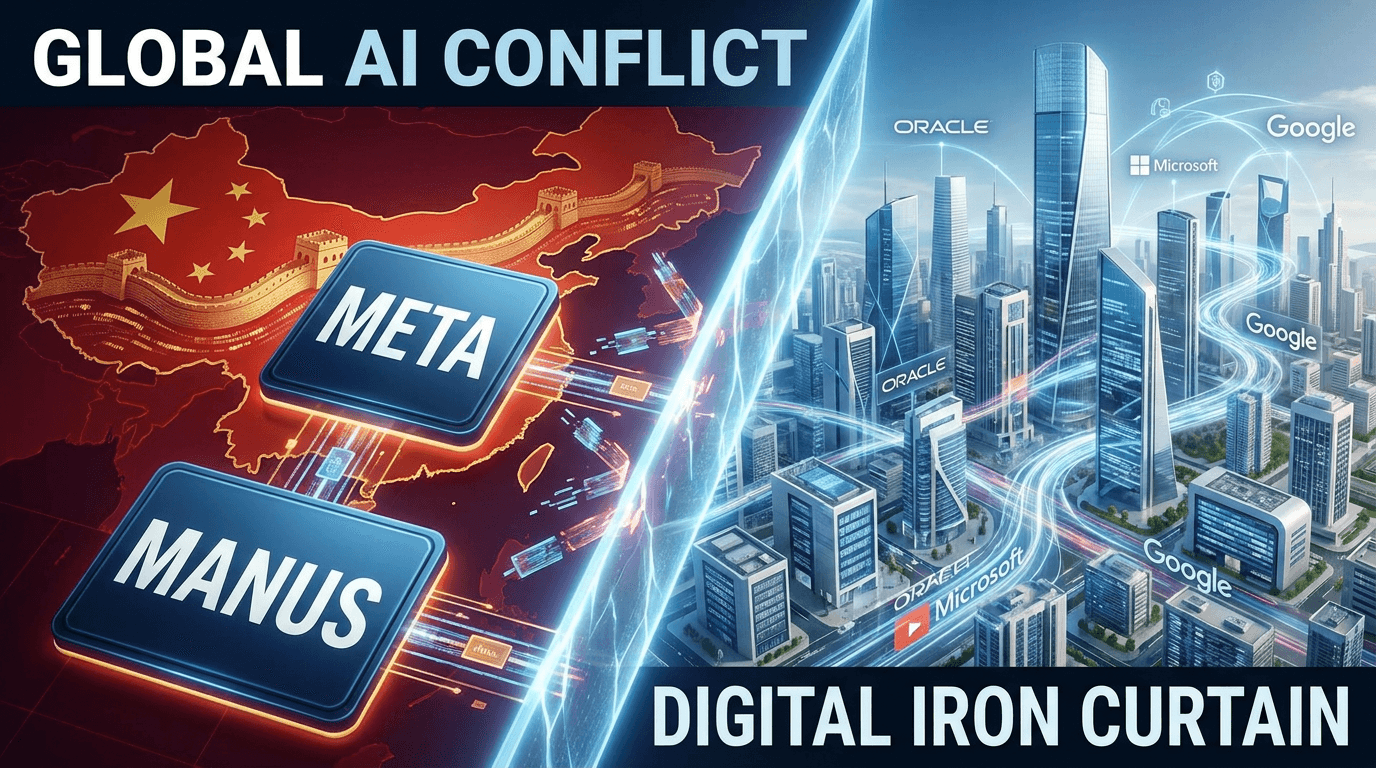
The move came just weeks ahead of US President Donald Trump's much anticipated summit with Chinese leader Xi Jinping in Beijing. The two are expected to iron out disputes on several key issues, ranging from trade to technology controls.[8]
Looking ahead, expect the following trends to accelerate through the rest of 2026:
More AI acquisitions will face geopolitical scrutiny from both sides, especially deals involving companies with talent or technology originating in either the US or China.
AI model providers will increasingly differentiate themselves by jurisdiction, marketing their data residency, regulatory compliance, and independence from foreign government influence.
Content creators and businesses will gravitate toward multi-model platforms that reduce dependency risk, preferring tools that can switch between AI providers seamlessly.
Open-source AI will continue to play a complex role, as models like DeepSeek demonstrate both the power of open development and the security concerns that come with it.
The AI tools that thrive will be the ones that give creators flexibility, transparency about which models they use, and the ability to keep producing content regardless of which specific AI model is in or out of favor with any particular government.
Conclusion
The Meta-Manus block is the clearest signal yet that AI technology has become a frontline in US-China competition. Two years ago, creators could choose AI tools purely based on quality and price. In 2026, the origin of the AI model behind your favorite tool, and the regulatory environment it operates in, matters just as much.
For content creators, the practical takeaway is straightforward. Build your workflows on flexible, multi-model platforms. Develop transferable skills like prompt engineering and content strategy. Stay informed about regulations. And diversify your tool stack so that no single geopolitical event can shut down your content pipeline.
The AI cold war is here. The creators who acknowledge it and adapt their workflows accordingly will be the ones still producing great content when the dust settles. The ones who ignore it risk waking up one morning to find their primary AI tool restricted, deprecated, or simply gone.
If you want to start building a more resilient content creation workflow today, Miraflow AI gives you access to AI image generation, YouTube thumbnail creation, cinematic video, AI Shorts, AI music, and more from a single browser-based platform. No setup, no downloads, and no dependency on a single model provider.
Frequently Asked Questions
What is Manus AI and why was it blocked?
Manus is an autonomous AI agent developed by Butterfly Effect, a startup founded in China and later based in Singapore. China's NDRC blocked Meta's $2 billion acquisition of Manus in April 2026, citing national security concerns about the transfer of Chinese-developed AI technology to a US company.
Does the Meta-Manus block affect AI tools I use as a creator?
Not directly in most cases, but it signals a broader trend of AI ecosystems splitting along geopolitical lines. If AI models or tools you rely on are built by companies caught in this divide, access or availability could change. Using multi-model platforms reduces this risk.
Is DeepSeek safe to use for content creation?
DeepSeek's open-source models are widely used, but the app and API have faced bans on government devices in several countries due to data privacy concerns. For general creative work, many creators use DeepSeek-based tools without issues, but understanding the data practices of any AI tool you use is important.
How does the TikTok situation relate to AI tool access?
The TikTok ownership restructuring shows that US regulators are willing to force technology platforms with Chinese connections to fundamentally change their operations. Similar pressure could eventually apply to AI model providers or tools that rely on Chinese-developed technology.
What is the best way to protect my content workflow from geopolitical disruption?
Use platform-level tools that integrate multiple AI models rather than building workflows around a single model. Save your prompt templates, maintain content strategy skills that transfer across tools, and stay informed about regulatory changes affecting AI-generated content.
Can AI-generated content still be monetized on YouTube in 2026?
Yes. YouTube allows monetization of AI-generated content as long as it meets community guidelines and content policies. The platform's focus remains on viewer satisfaction, retention, and engagement, not on how the content was produced.
Will there be more AI tool restrictions in 2026?
Based on current trends, additional restrictions on both sides are likely. The US is considering legislation to further limit AI technology exports to China, while China is tightening controls on Chinese companies taking foreign investment. Creators should plan for a more fragmented AI tool landscape going forward.
References
- China blocks Meta's $2 billion takeover of AI startup Manus
- China has erased the US lead in AI, Stanford HAI's 2026 AI index reveals - SiliconANGLE
- Everyone in AI is talking about Manus. We put it to the test. | MIT Technology Review
- TikTok AI Content Labeling 2026 — Label or Get Removed (Official Rules)
- China seeks to block US tech giant Meta from AI acquisition | Technology News | Al Jazeera
- US-China tech decoupling increases willingness to share personal data in China | Humanities and Social Sciences Communications
- Manus AI Agent: What It Is, How It Works, & Its Impact 202520252025
- What are TikTok's AI content guidelines for 2026? – Napolify
- Op-ed: In blocking Meta-Manus deal, China sent a powerful reminder to Mark Zuckerberg and U.S. market about AI race
- Unpacking US-China "Decoupling" in AI - Internet Governance Project
- Manus (AI agent) - Wikipedia
- Does TikTok Allow AI Influencers in 2026? Rules Explained
- China’s Meta Backlash Renders Manus Model ‘Officially Dead’ - Bloomberg
- China’s AI development model in an era of technological deglobalization | Merics
- From Mind to Machine: The Rise of Manus AI as a Fully Autonomous Digital Agent
- Is DeepSeek Safe? Privacy Concerns & Banned Countries 2026
- China’s decision to block the $2 billion Meta-Manus deal shows how far Washington and Beijing are drifting apart over AI | Fortune
- Latest NDAA Supports AI Safety, Innovation, and China Decoupling | Lawfare
- Leave it to 'Manus AI' - Features and Potentialities Revealed
- US lawmakers move to ban DeepSeek AI tool | Computer Weekly
- China says it ordered reversal of Meta’s Manus AI acquisition - The Washington Post
- Text - S.321 - 119th Congress (2025-2026): Decoupling America's Artificial Intelligence Capabilities from China Act of 2025 | Congress.gov | Library of Congress
- Context Engineering for AI Agents: Lessons from Building Manus
- TikTok AI Generated Content Policy and Labeling Requirements in 2026
- Can China Really Block Meta’s Manus AI Acquisition?
- Countries are choosing between the U.S. and China in the AI race - Rest of World
- Introducing Manus: The general AI agent — WorkOS
- 'CODE RED' Author Tells 'Daily Mail:' AI 'Data Vacuums' Like TikTok and DeepSeek Are Chinese Espionage Tools
- China blocks Meta’s acquisition of Chinese-founded AI startup Manus | CNN Business
- Competing AI strategies for the US and China | Brookings
- Manus AI: An Analytical Guide to the Autonomous AI Agent 2025
- Is DeepSeek next in line for a TikTok-like US ban?
- China blocks Meta from acquiring AI startup Manus : NPR
- Eight ways AI will shape geopolitics in 2026 - Atlantic Council
- Manus AI, Know the Use of General AI Agent, Capabilities & Examples
- The TikTok Ban: What Happened, and Will TikTok Actually Go Away? | Built In
- China Pulls the Plug on Meta’s AI Acquisition
- The AI Superpower Showdown. Inside the US-China Race for… | by Mark Craddock | Medium
- Manus - AI Agent & Automation - App Store - Apple
- TikTok Algorithm 2026: 3 New Rules You Must Follow
4:58 PM